wtorek, 14 kwietnia 2015

Minigun - największa filmowa "kosiarka" / The Minigun - the movie top "lawn-mower"

Film tworzy wiele elementów. Gra aktorów, muzyka, scenariusz, dialogi, zapadające w pamięć ujęcia, sceny, które przechodzą do historii. Nawet jeśli trwają kilkanaście lub kilkadziesiąt sekund. Jak długa seria, piekielny ogień ciągły z karabinu maszynowego, który niszczy wszystko na drodze kul. Np. dżunglę. Tak, zgadliście, to scena z „Predatora” (1987, reż. John McTiernan) - moment, w którym narodziła się kariera karabinu M134 Minigun - największej i najbardziej filmowej "kosiarki".

A movie is created my multiple elements. Acting, music, screenplay, dialogues, memorable shots and scenes that become historical, even if they last for a couple or dozens of seconds. Like a long burst, a hellfire from a machine gun that cuts like grass everything on its way. A jungle, for instance. Yes, you got that right, it’s a scene from „Predator” (1987, directed by John McTiernan) – the moment the career of the M134 Minigun - the biggest and the most cinematic "lawn-mower" - was born.


Karabin oczywiście pojawił się w filmie chwilę wcześniej, jako broń „seksualnego tyranozaura” Blaina (Jessie Ventura), ale była to zaledwie uwertura do tego, co miał zaprezentować Mac (Bill Duke), karczując dżunglę po śmierci swojego towarzysza.

Of course, the machine gun appeared earlier in the movie, presented as the weapon of choice of „Sexual Tyrannosaurus” Blain (Jessie Ventura), but that was just a foreplay to what Mac (Bill Duke) was about to present while spraying the jungle with lead in a revenge-frenzy after his pal was killed.


Wprowadzony w czasie wojny w Wietnamie, 6-lufowy karabin kalibru 7.62x51mm oparty na systemie Gatlinga, rzecz jasna pojawiał się i wcześniej w filmach, ale jako karabin montowany na pokładzie śmigłowców typu UH-1 Huey, jak np. w „Czasie Apokalipsy” (1979, reż. Francis Ford Coppola) albo „Rambo 2” (1986, reż. John Pan Cosmatos). Skąd nazwa "Minigun"? Karabin stworzono jako mniejszą wersję działka M61 Vulcan. I faktycznie trzeba przyznać, że kaliber 7.62x51mm w porównaniu z 20mm pociskami to naprawdę rozmiar "mini". Termin jest obecnie często wykorzystywany w odniesieniu do innych podobnych karabinów. "Ojca" Miniguna, czyli karabin, Gatlinga można zobaczyć m.in. w "Księdze ocalenia" (2010, reż. Allen i Albert Hughes) oraz "Ostatnim samuraju" (2003, reż. Edward Zwick).

Introduced during the Vietnam War, a six-barreled machine gun, 7.62x51mm caliber, based on the Gatling system, appeared of course earlier in the cinema, but as a machine gun mounted on helicopters such as the UH-1 Huey, as in “Apocalypse Now” (1979, directed by Francis Ford Coppola) or “Rambo: First Blood Part II” (1986, directed by John Pan Cosmatos). Where does the name "Minigun" come from? The machine gun was created as a smaller version of a M61 Vulcan cannon. And surely you gotta admit that 7.61x51mm, when compared to 20mm rounds, sounds like a "mini" size. Nowadays, the term is used in reference to other similiar weapons. And the "father" of Minigun, that is the Gatling gun, you could see in "Book of Eli" (2010, directed by Allen & Albert Hughes) as well as in "The Last Samurai" (2003, directed by Edward Zwick).


Wracając do naszego "bohatera", cały filmowy urok strzelania z Miniguna polega na pruciu z niego trzymając oburącz, wciskając do oporu przycisk joysticka jako spust. Nic dziwnego, że Arnold pozazdrościł Billowi Duke’owi ekranowej rozwałki, bo cztery lata później mogliśmy go zobaczyć z Minigunem w „Terminatorze 2” (1991, reż. James Cameron), gdzie jako cyborg niszczył precyzyjnym ogniem policyjne radiowozy. Jest to de facto ten sam egzemplarz wykorzystany w "Predatorze", zmodyfikowany na potrzeby nowego filmu, choć wstępnie Arnie miał pruć z pistoletu maszynowego  MAC-10. Dzięki Bogu twórcy filmu zmienili zdanie.

Coming back to our "main hero", the whole movie magic of the Minigun-shooting is the handheld use, when you press the button of the joystick like a trigger. There’s nothing strange about the fact that Arnold got jealous about Bill Duke’s demolition in the screen and four years later we could see him with the Minigun in “Terminator 2: Judgment Day” (1991, directed by James Cameron), where as a cyborg he destroys police cruisers with an accurate fire. It is in fact the gun used in "Predator", modified for the new movie, although first Arnie was supposed to spread lead from a MAC-10 submachine gun. Thank God they changed their mind.


Zresztą, wystarczy spojrzeć na ten uśmiech.

Besides, just like at this smile and it’s all clear.


Oczywiście, nie mogło zabraknąć tej broni w kolejnych częściach Terminatora. W zdecydowanie najsłabszym „Buncie maszyn” (2003, reż. Jonathan Mostow), w dwa Miniguno-pochodne karabiny uzbrojone są roboty T-1, zaś w „czwórce” (2009, reż. Joseph McGinty Nichol) – jeden z potężnych, mocno przypalonych T-600 wędruje przez zgliszcza Los Angeles niczym mroczny żniwiarz z na stałe zamontowanym na ramieniu M134.

Of course, the weapon is obviously present in following parts of the Terminator series. In definitely the weakest “Rise of the Machines” (2003, directed by Jonathan Mostow), T-1 robots are armed with two Minigun-based machine guns, and in the fourth part (2009, reż. Joseph McGinty Nichol), an enormous heavily-burnt T-600 cyborg marches through the ashes of Los Angeles like a grim reaper with the M134 mounted one of his arms.


A wracając do „Terminatora 2”, z całym szacunkiem dla Billa czy Jessy’ego, do którego oryginalnie należał karabin w „Predatorze”, Arnoldowi zdecydowanie bardziej on pasuje. Oczywiście, Miniguna nie mogło zabraknąć w remake’u „Preatora”, czyli w „Predators” (2010, reż. Nimród Antal), gdzie M134 trafił do rąk wielkiego specnazowca, Nikolaja (Oleg Takarov). Jeden z łowców niszczy go strzałem z działka plazmowego, tak jak w pierwszej części zniszczeniu podobnym strzałem uległ karabin M16 Dutch’a (Arnold Schwarzenegger).

Coming back to “Terminator 2”, with all the respect for Bill or Jessy who the machine gun originally belonged to in the movie, but it suited Arnold helluva better. Of course, it had to appear in the remake of “Predator” – “Predators” (2010, directed by NimródAntal), where the M134 is seen in hands of a huge Spetsnaz soldier, Nikolaj (Oleg Takarov). Just like in the original version, Nikolaj sprays the jungle with lead as Mac did. One of the Predators destroys the Minigun with a plasma blaster shot, similarly to the method of destruction of the M16 assault rifle used by Dutch (Arnold Schwarzenegger) in the first part.


Rok przez Terminatorem, inny elektroniczno-mechaniczny twór starł się z policją przy użyciu Miniguna. W sequelu „Robocopa” z 1990 r. (reż. Ivan Kershner), znajdujący się na głodzie narkotykowym i w szale zabijania RoboCain kosi policjantów z zamontowanego na jednym z ramion M134 (rzecz jasna, zmodyfikowanym na potrzeby jego konstrukcji). Oczywiście nie ma co porównywać tych dwóch scen – precyzyjny stoicki ogień Terminatora bije na głowę furiackie serie narko-cyborga.

A year before the Terminator, another electronic-mechanical creation faced the police with the Minigun. In the 1990 sequel of “RoboCop” (directed by Irvin Kershner), a drug-hungry RoboCain, in its kill-frenzy wastes police officers with the M134 (obviously modified for its individual construction) mounted on one of its arms. Of course, it’s pointless to compare the two scenes – an accurate fire of Terminator is far more better than furious bursts of the narco-cyborg.


Podobnie uzbrojony został Nemesis w „Resident Evil 2: Apocalypse” (2004, reż. Alexander Witt) – z zapasem 5000 sztuk amunicji ze skrzyni umieszczonej na plecach, wybija członków oddziału S.T.A.R.S. ogniem tak precyzyjnym, że znajdujący się w tym samym pomieszczeniu cywil nie zostaje nawet draśnięty. Broń otrzymał także Don Cheadle w drugiej części “Iron Mana” (2010, reż. Jon Fevreau), można więc uznać, że Minigun cieszy się szczególną popularnością jako naramienny lub ręczny miotacz ołowiu wśród bohaterów filmów science-fiction.

Similarly, the character of Nemesis in „Resident Evil 2: Apocalypse” (2004, directed by Alexander Witt) carries the weapon with 5000 rounds in an ammo box packed on his back and kills all S.T.A.R.S. members with accurate fire, without even scratching a civilian present in the same room with the soldiers. Filmmakers also equipped Don Cheadle with the weapon in the sequel of “Iron Man” (2010, directed by Jon Fevreau), so you might say that the Minigun is especially popular as a shoulder-mounted and handheld lead-thrower among science-fiction characters.


Wróćmy jednak do historii… Samemu McTiernanowi po „Predatorze”, Minigun chyba na tyle się spodobał, że wykorzystał go niestety w nie do końca udanym pastiszu Schwarzeneggerowskich filmów, czyli „Bohaterze ostatniej akcji” (1993), gdzie możemy zobaczyć stacjonarną, zamontowaną w furgonetce wersję M134 z krótkimi lufami. Broń pokazuje się tylko na chwilę i nie odnosi wielkiego skutku.

However, let us get back to history… Having a good experience with the machine gun in „Predator”, McTiernan used the firearm in an unfortunately failed pastiche of Schwarzenegger’s movies – „Last Action Hero” (1993), where we can see a short-barreled version of the M134, mounted in a van. However, the gun appears for a while in the hands of a criminal and the shots fired has no effect.


Zamontowany podobnie jak w „Bohaterze ostatniej akcji”, Minigun pojawił się w drugiej części filmu „Red” (2013, reż. Dean Parisot), gdzie czarny charakter (Lee Byung-hun) dokonuje totalnej rozwałki próbując trafić Bruce’a Willisa i Johna Malkovicha – oczywiście, podobnie jak w nieudanej komedii McTiernana, czyni to bez skutku.

Mounted similarly as in “Last Action Hero”, the Minigun appeared in the sequel of “Red” (2013, directed by Dean Parisot), where the black character (Lee Byung-hun) demolishes everything in his line of fire, trying to hit Bruce Willis and John Malkovich – of course, as in the failed McTiernan’s comedy, without any results.


Grzechem byłoby nie wspomnieć o kultowym Dannym Trejo jako tytułowym bohaterze filmu „Maczeta” (2010, reż. Ethan Maniquis & Robert Rodriguez) i karabinie zainstalowanym na motocyklu. Jako że Maczeta nie SMSuje, lecz zabija, możecie sobie wyobrazić, co wyczynia z tym "narzędziem".

It would be a sin not to mention the cult figure of Danny Trejo as the title character of “Machete” (2010, directed by Ethan Maniquis& Robert Rodriguez) and the machine gun mounted on his motorcycle. As Machete doesn’t text, but kills, you know what to expect with this “tool”. 


Natomiast jeden z ciekawszych „występów” Minigun zaliczył w obrazie Braci Wachowskich – „Matrixie” (1999). Używając karabinu zainstalowanego na pokładzie śmigłowca Bell-212, Neo (Keanu Reeves) buduje istną ścianę ognia, ale na tyle precyzyjną, by skosić agentów, nie raniąc przy tym Morfeusza (Lawrence Fishbourne) – jednym z najbardziej pamiętnych ujęć jest ukazanie deszczu łusek z karabinu.

Still however, the Minigun got one the most interesting roles in the Wachowski Brothers’ movie – „Matrix” (1999). Neo (Keanu Reeves) uses the machine gun mounted in the Bell-212 helicopter to create a volley of fire – accurate enough to hit the agents, without injuring Morpheus (Lawrence Fishbourne) – here, one of the most memorable shots is the one presenting the rain of brass from the machine gun.


Karabin jako bohater dający ogromną przewagę, siejący strach i śmierć, ale i wprawiający w zdumienie, pojawił się w obrazie ilustrującym pierwszą bitwę Amerykanów w czasie wojny w Wietnamie, czyli „Byliśmy żołnierzami” (2002, reż. Randall Wallace), gdzie jest częścią systemu M21, współtworzonego razem z wyrzutniami rakiet niekierowanych.

The weapon as giving a superior firepower, spreading fear and destruction, but also leaving everyone speechless, appeared in a movie that depicted the first battle of the American military in the Vietnam War, that is: “We Were Soldiers” (2002, directed by Randall Wallace), where it was part of the M21 system, co-created with unguided-missile launchers.


W “Helikopterze w ogniu” (2001, reż. Ridley Scott), GAU-17/A, czyli wersja M134 dla marynarki i lotnictwa, znalazł się na pokładzie MH-60L Black Hawk i AH-6 Little Bird. I tutaj, podobnie jak w „Matrixie”, znalazło się piękne ujęcie deszczu gorących łusek.

In „Black Hawk Down” (2001, directed by Ridley Scott), where the GAU-17/A, that is the M134 version for the USAF and US Navy, it is mounted on the MH-60L Black Hawk and AH-6 Little Bird. Here also, just like in “Matrix”, we can see a beautiful rain of hot brass.


Karabin w tej wersji zobaczymy także na wyposażeniu łodzi operatorów SEALs w „Akcie Odwagi” (2012, reż. Scott Waugh & Mike McCoy). Nauka z tego jedna. Gdy dobrzy goście mają tę giwerę, złym kolesiom pozostaje tylko brać nogi za pas!

We will see this particular version of the gun also as the weapon of SEALs operators in their boats in “Act of Valor” (2012, directed by Scott Waugh & Mike McCoy). The conclusion here is simple. When the good guys have this gun, all the bad guys can do is run!


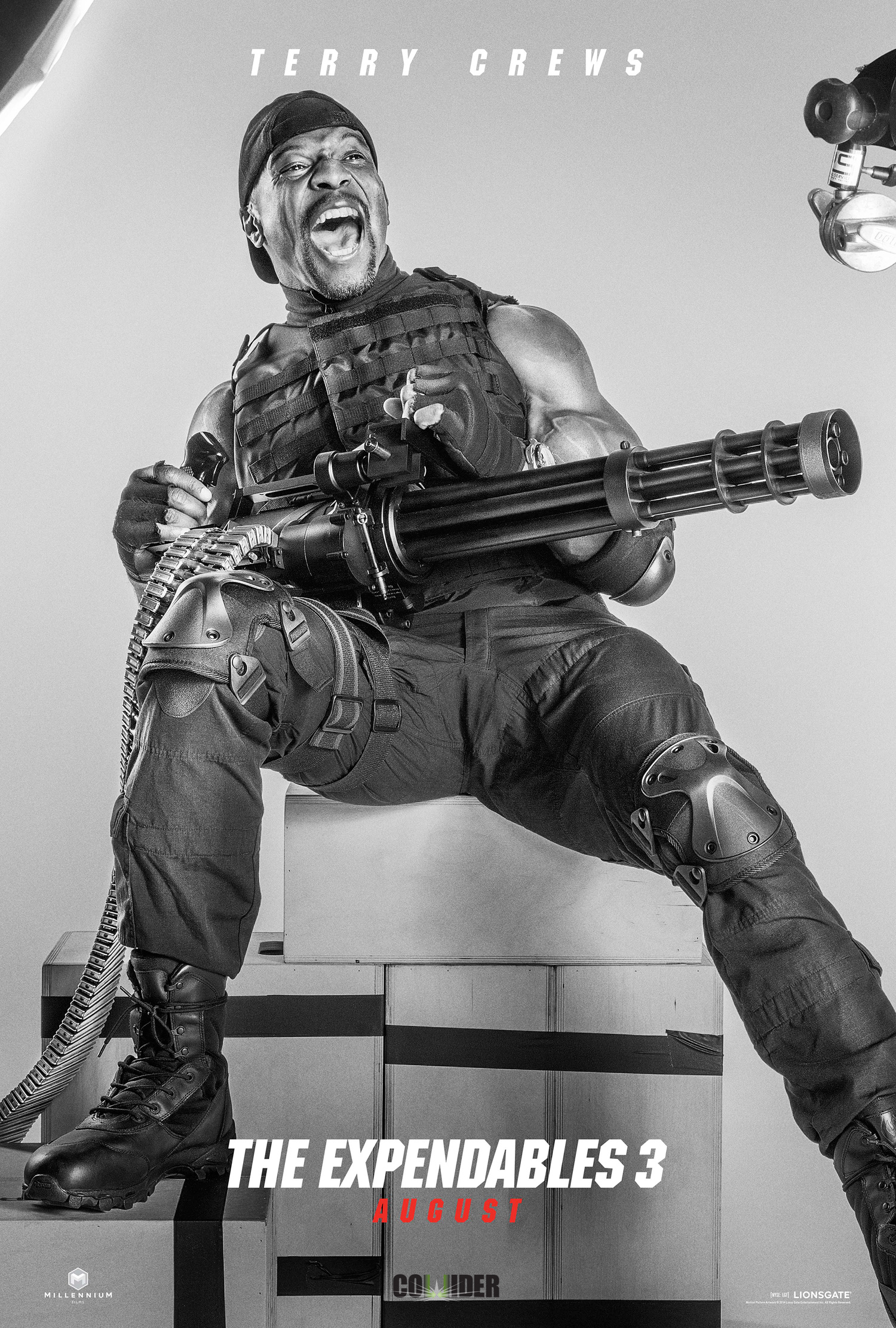
Minigun to oczywiście broń cholernie żarłoczna, co przy szybkostrzelności maksymalnej bagatela 6000 strzałów na minutę, oznacza błyskawiczne wyczerpanie amunicji. Niejako odniesiono się do tego w „Niezniszczalnych 3” (2014, reż. Patrick Hughes) – filmie, który jako jeden z ostatnich możemy posądzać o realizm. Zgodnie z ostrzeżeniem Gunnara (Dolph Ludgren) na chwilę przez strzelaniną w dokach, Cezarowi w ciągu kilku sekund kończą się naboje.

The Minigun is of course very ammo-consuming which – with the rate of fire 6000 shots per minute, equals an extremely fast depletion of ammo. You can find a reference of a kind to this fact in “The Expendables 3” (2014, directed by Patrick Hughes) – a movie that is certainly the last one to be perceived as realistic. Just like Gunnar (Dolph Lundgren) said a few minutes before the firefight in the docks, Caesar (Terry Crews) runs out of ammo in a few seconds.

Poza tym, niezależnie od tego, jak wielka i silna jest postać (nie licząc mutantów czy cyborgów), stabilne trzymanie i precyzyjny ogień jest bardzo trudny, dlatego broń zwykle jest montowana na pojazdach czy śmigłowcach jak widzieliście już w kilku scenach. Plus, w przeciwieństwie do zdecydowanej większości broni, potrzebuje też zewnętrznego, elektrycznego zasilania. Dlatego z wielką skrzynią amunicji należy zadbać o coś, co będzie w ogóle obracało sześć luf i dostarczało pociski.

Besides, no matter how strong the character is (apart from mutants or cyborgs), it is very difficult to hold the weapon steady and provide an accurate fire, and that is why the weapon in mounted on vehicles or helicopters as you could see in several scenes. Plus, contrary to most of the firearms, it also needs an external power supply. So apart from the ammo box you need to make sure you’ve got something (that is: the energy) that would keep turning the six barrels and feed the gun with rounds.


I tutaj oddaję głos Panu Christopherowi Myersowi, Dyrektorowi Marketingu z firmy Profense, która specjalizuje się w dostarczaniu systemów na bazie M134 dla wojska i innych służb mundurowych. Miałem przyjemność spotkać Pana Myersa na zeszłorocznych targach MSPO (na Międzynardowym Salonie Przemysłu Obronnego) w Kielcach i zamienić kilka słów na temat znajdującego się na stoisku Miniguna.

And now is the time for the expert’s opinion – let me introduce to you Mr. Christopher Myers, Chief Marketing Officer from Profense, a company that specializes in production of the M134 weapon systems for the military and other uniformed services such as law enforcement. I had the pleasure of meeting Mr. Myers at the last year’s International Defense Industry Exhibition in Kielce and the pleasure of talking for a while about the Minigun displayed at the stand.


Admin z M134 Minigun na targach MSPO 2014.
/ Admin with the M134 Minigun at the MSPO 2014.
Na co dzień pracuje Pan z bronią, więc oglądając filmy z pewnością widzi Pan masę nieścisłości. Czy zapomina Pan o nich, traktując film jako fikcję i świat rządzący się swoimi prawami czy irytuje się i wyłącza film?

You work with weapons on daily basis so surely while watching movies you see a lot of mistakes. What is your attitude: do you skip them because you treat it all as fiction and you accept the fact that the movie world is governed by its rules or do you get irritated and turn the movie off?

Tak naprawdę to lubię oglądać filmy, w których jest ukazany Minigun. Ludzie zawsze fajnie komentują systemy uzbrojenia tego typu, na co ja oczywiście reaguje uśmiechem, bo jest to, coś co moja firma produkuje i rozwija na całym świecie.

Actually, I enjoy watching the movies where a Minigun is shown. People always gawk and make cool remarks about the weapon system, which of course makes me smile because it’s a weapon system I manufacture and support globally. 

Christopher Myers, Profense, LLC
A gdzie zaczyna się fikcja? Jakie są najczęściej popełniane błędy w przedstawieniu tej broni? Czy są jakieś uzasadnione uproszczenia?

Where do the ficticious elements begin? What are the most common mistakes in the gun’s depiction? Are there any justifiable simplifications? What are the stereotypes or myths supported by the cinema?

Fikcja dotyczy zawsze faktu, że system uzbrojenia może być przenoszony ręcznie. Choć jest to TECHNICZNIE możliwe, to jednak w rzeczywistości mało prawdopodobne, to znaczy – standardowo cała metalowa konstrukcja broni to około 28kg. A jest to waga bez zasilania (24VDC) i amunicji (100 sztuk waży około 1,3kg), a system umożliwia wystrzeliwanie 3000 sztuk amunicji na minutę. Czyli 39 kg amunicji + 28 kg samej broni + zasilanie około 8 kg wraz z zamontowaną taśmą doprowadzającą pociski. To oznacza taszczenie co najmniej 90kg dla „wystrzałowej” zabawy przez minutę. Wszystko, tylko nie to, jest możliwe (śmieje się).

The ficticious elements always begin with the fact that the weapon system can be hand carried. While it is TECHNICALLY feasible the reality is not likely, meaning – the average gun weight in a steel configuration is approximately 62 lbs. This is without a battery pack (24VDC) and ammunition (each 100 rounds weighs 3.5 lbs) and the weapon system fires 3,000 rounds p/minute. Thus – 100 lbs in ammo + 62 lbs in gun + battery pack approximately 17.5 lbs and feed belt plus harness. You would be lugging at least 200 lbs for a 60 second joy ride. Other than that anything is possible (laughs).


Ma Pan swój ulubiony film z Minigunem w jednej z głównych ról?

Do you have your favourite movie with the Minigun in one of the main firearm roles?

“Helikopter w ogniu” to póki co najlepsza produkcja z M134 z uwagi na ukazanie oddziału ratunkowego i moje doświadczenia jako pilota służącego w Siłach Lotniczych USA. Miałem okazję przekonać się na własne oczy o przeważającej sile ognia, jaką niesie ze sobą system. To najbardziej realistyczny filmowy portret tejże broni. Co więcej – z punktu widzenia psychologii, nie ma NIC co dałoby się porównać do dźwięku strzelającego M134.

"Black Hawk Down" is by far the best action series with the M134 because of its combat rescue and a profile I flew my entire career for the U.S. Air Force. You get to witness the true impact and superior firepower this weapon system brings. It is the most realistic portrayal of the firearm in the movies. Also – from a psychological perspective there is NOTHING like to sound of a M134 in action. 


Czy widzi Pan jakieś trendy pod kątem prezentacji broni w filmach, nie tylko jeśli chodzi o Miniguna? Czy Profense współpracowało z twórcami filmów? Czy wasze produkty można zobaczyć na ekranie?

Do you see any specific trends concerning the presentation of firearms in the movies, not only about the Minigun? Have Profense co-operated with filmmakers? Can we see your products in the silver screen?

Przykre jest to, że ludziom się wydaje, iż bycie “bad-assem hardkorowcem” jest fajne. Że zabijanie jest fajne. A jest zupełnie na odwrót. Profesjonalista (czy to żołnierz sił specjalnych czy regularnych oddziałów) nie chce nikogo zabijać. Zabijanie wynika z potrzeba ocalenia życia członków oddziałów lub swojego. Systemy uzbrojenia są produkowane, by chronić… tak, słowo klucz to CHRONIĆ życie żołnierza czy oddziału. To, co obecnie obserwuję, to że wszyscy chcą sobie  „zapolować”. Choć ŚWIETNIE to wygląda w filmach, trzeba zrozumieć, że to tylko rozrywka. Nawet nie próbujcie tego robić na serio. 

Zaś jeśli chodzi o filmową współrpacę, Profense angażuje się w różne produkcje. Ale ze względu na podpisane przez nas umowy o zachowaniu poufności nie mogę zdradzić, o jakie działania konkretnie chodzi.

The unfortunate reality is people tend to think being a “Johnnie Bad Ass” is cool. That killing people is cool. It’s the absolute opposite. A true professional soldier (whether Special Forces or Conventional Forces) doesn’t want to kill anyone. It is a necessity of a requirement to save a team member or personal life. Weapon systems are designed to protect… the key word here is PROTECT one’s life, one’s team. What I continue to see now is everyone wants to “hunt”. While it makes for GREAT movies people must remember these are movies for entertainment. Please don’t ever try to replicate.

As for movie co-operation, Profense, LLC supports a varietyof media formats. Because of our non-disclosure agreements I can not discuss who or what we’ve supported.


W trakcie naszej rozmowy na targach opowiadał Pan o udoskonaleniach ułatwiających użytkowanie karabinu, m.in. w zakresie chłodzenia. Co zmieniło się w obrębie systemu w ciągu 50 lat odkąd karabin pojawił się w uzbrojeniu?

During our conversation at the MSPO, you mentioned several improvements that make the use of the machine gun easier, e.g. in terms of cooling system. What have changed during the 50 years since the M134 appeared among the weapons used by the US military? What would be its future, in your opinion?

Główne założenia systemu broni pozostaną niezmienione (np. wysoka i stabilna szybkostrzelność). Jeśli chodzi o udoskonalenia (lub trendy), to są alternatywne materiały (np. kompozyty, włókna węglowe, stopy, powłoki), zasilanie (alternatywne źródła energii) i wszystko, co pozwoli w jakikolwiek sposób zmniejszyć wagę. Inny kluczowy trend to cyfrowe analizy oferujące na bieżąco aktualne dane w celu prowadzenia zapobiegawczej konserwacji.

The weapon system’s basic principals will always remain the same (i.e., high rates of sustained fire). Where there are improvements (or trends), can speak of of alternative materials (i.e., composites, carbon fibers, alloys, coatings), power supplies (i.e., alternative energy consumptions) and any weight-savings possible. Another key trend is digital analytics to provide real-time data trends for preventative maintenance. 


Jak produkty i rozwiązania oferowane przez Pana zmieniają rzeczywistość konfliktów? Co dają użytkownikom, poza siłą ognia? Czy istnieje coś, czego kamera filmowa nie uchwyci?

The products and solutions you’re offering, how they change the reality of military conflicts? What do they give to the users, apart from the firepower? Is there anything that the movie camera cannot capture?

Możemy pochwalić się tym, że oferuje siłom zbrojnym najbardziej zaawansowaną wersję M134. Profense nieustannie prowadzi kompleksowe prace nad M134: od cyfrowego sterowania bronią po udoskonalenia w mechanicznym zasilaniu, by wyeliminować zacięcia.

We take great pride in providing the military with the most advanced M134 available. From digital Gun Control Units to mechanical-feed improvements to eliminate hand-over failures, Profense continues to build the M134 from the ground up. 


Czy kino odzwierciedla technologie dostępne dla żołnierzy XXI wieku? A może jest kilka kroków do tyłu?

Does the cinema reflect the technology available for soldiers of the 21st century? Or is it a few steps behind?

Nie, kino jest na bieżąco z bronią przyszłości. Można spokojnie założyć się, że to co widzi się w filmach, za parę lat będzie standardowym wyposażeniem żołnierzy. Chyba, że jest TAJNE (śmiech).

No – cinema captures current and future weapons pretty well. You can bet what you see in the movies will be a soldiers real weapon in a few short years. If they are not CLASSIFIED (laughs).


Czy istnieją jakieś anegdoty o M134, którymi chciałby się Pan z nami podzielić?

Are there any anecdotes concerning the M134 you would like to share with us?

M134 to najbardziej skuteczny system uzbrojenia w swojej klasie (broni małokalibrowej). Nie ma drugiego takiego systemu jak ten Gatlinga, który w tak ogromnym stopniu dominowałby na polu bitwy. Nie mogę się doczekać rozwoju trendów w siłach naziemnych, dotyczących wykorzystania M134 jako broni zwiększającej siłę ognia jednostki, gdyż poziom skuteczności siły ognia jednego M134 to mniej więcej sześć karabinów typu M240, M60 czy FN MAG-58.

The M134 is the most combat effective weapon system in its class (small arms). There is no other weapon that dominates the battle-space like a Gatling system. Look to see trends in conventional ground forces utilizing weapons like the M134 as force multipliers because the fire effectiveness of a single M134 equals upto six M240, M60 or FN MAG-58’s. 

Dzięki za rozmowę i do zobaczenia na MSPO 2015!

Thanks for the interview and see you at the MSPO 2015!


niedziela, 29 marca 2015

„Gorączka” to mój ukochany film. / „Heat” is my favourite movie.

Bartek Bera – tegoroczny zdobywca Buzdygana Internautów, fotograf uwieczniający piękno śmigłowców i samolotów, niejednokrotnie też i sił specjalnych. Miłośnik lotnictwa i broni automatycznej, który bez końca może oglądać „Gorączkę” Michaela Manna, zwykle strzelający foty innym – dziś sam znalazł się w ogniu… pytań. A odpowiedział celnie i – co ważniejsze – ciekawie.

Bartek Bera – this year’s winner of Internauts' Buzdygan Prize, a photographer that captures the beauty of choppers and aircrafts, repeatedly of the special forces. An enthusiast of aviation and automatic weapons, who can watch Michael Mann’s “Heat” over and over again, usually shooting pictures of others, today found himself in the cross-fire of… questions. And he returned it with accurate and – what is more important – interesting answers.

Z ukochanym HK416 - w trakcie sesji z GROM-em.
With his beloved HK416 - during the session with GROM. 
Pewnie zadawano Panu to pytanie wiele razy, ale dlaczego fotografia i dlaczego właśnie wojskowa? Czy ma Pan także inne pasje czy zainteresowania, które wspierają Pana pracę?

I’m sure this you’ve asked this question many times, but I’ve got to ask it too: why photography and why the military photography? Do you have any other passions that support your work?

Zainteresowanie wojskiem, a lotnictwem szczególnie, istniało u mnie od zawsze. Często spędzałem wakacje na terenach, gdzie aktywność lotnicza była spora (Nowy Glinnik – 66. Lotniczy Pułk Szkolny, Piła – 6 Pułk Lotnictwa Myśliwsko-Bombowego) i ewidentnie wyryło się to jakoś w mojej świadomości. Potem, w czasach liceum i pierwszych lat studiów, miałem odrobinę przerwy, ale wraz z zakupem pierwszego aparatu cyfrowego dawna pasja odżyła. Oczywiście, nie od razu, potrzeba było sporo wysiłku, by dotrzeć tu gdzie jestem, ale uczciwie trzeba powiedzieć, że był to bardzo przyjemny wysiłek. Chciałem też podkreślić, że nie czuję się żadnym znawcą tematyki militarnej, choć oczywiście nie ograniczam się tylko do beznamiętnego naciskania spustu migawki. Staram się systematycznie poszerzać swoją wiedzę na tematy, z którymi obcuję za pośrednictwem obiektywu, ale dalej uważam, że moja wiedza nie jest wystarczająco głęboka.

I’ve been interested in the military, and in military aviation in particular, since I can remember. I used to spend summer holidays in places where aviation was a common thing (e.g. in Nowy Glinnik – 66th Aviation Training Regiment, in Piła – 6th Fighter-Bombers Regiment) and surely it stamped my consciousness in a way. Then, during the secondary school and first years of university, I had a break – but when I bought my first digital camera – my passion was reborn and returned. Of course, not at once – it took me some effort to get where I am now, but, honestly, it was a very pleasant effort. I would like to underline here the fact that I am not military expert, although I surely do more than just click the shutter. I’m trying to develop my knowledge systematically in the field I am in touch with via my camera, but again this knowledge is not deep enough.


Wiem, że jest Pan fanem filmu Michaela Manna "Gorączka", w szczególności zaś sceny pojedynku grupy Neila McCauleya (Robert De Niro) z L.A.P.D. Co czyni tę scenę tak wyjątkową?

I know that you’re fan of Michael Mann’s „Heat” and in particular: the scene of a shootout between Neil McCauley’s (Robert De Niro) gang and L.A.P.D.  What makes this scene so special?

Tak, "Gorączka" to zdecydowanie mój ukochany film. Pamiętam, jak wcisnął mnie w fotel w kinie, gdy widziałem go po raz pierwszy w 1995 roku w mojej rodzinnej Częstochowie. Z niewiadomych w sumie przyczyn zawsze uwielbiałem sceny z bronią – szczególnie maszynową, więc już zwiastuny mnie przekonały, że na film iść muszę. Oczywiście, nie zawiodłem się. Scena wyjścia z banku jest w mojej opinii najlepszą strzelaniną w historii. Uwielbiam jej realizm, dbałość o detale i warstwę dźwiękową. Podoba mi się kwestia wymiany magazynków i ich obecności (w ułamkach sekund jeszcze w banku widać jak ekipa McCauleya ma kamizelki „taktyczne” z dodatkowymi magazynkami – coś, co w innych filmach praktycznie nie występowało). Oczywiście jest też legendarny już niemal moment gdy, ukryty za samochodem Shiherlis przepina magazynek – ponoć w Marines pokazują go rekrutom jako wzorzec szybkości przeładowania.

Yes, „Heat” is definitely my favorite movie. I remember that it kept me on the edge of my seat when I first saw it in 1995 in the cinema in my family city of Czestochowa. For reasons still unknown to me, I have always liked the scenes with firearms – especially the automatic ones, so the trailers already convinced me to go to the cinema. And I got what I wanted, I was fully satisfied. The scene presenting the escape from the bank is one of the best in history, in my opinion. I love the realism, details and the sounds. I like the mag-changes and the fact it was actually presented (still in the bank one can see that McCauley’s gang have “tactical” vests with extra magazines – something that had not been seen before in the movies in those times). Of course, there is a legendary moment of mag-change performed by Shiherlis hidden behind the cars – I heard that in the US Marines it is shown to the recruits as the example of speed reloading to follow.


Lubię wszelakie skrócone wersje M16 – tu mamy głównie pięknego Colta 733 – choć przyznaje, że początkowo myślałem, że to Colt Commando. Pamiętam, jak w Afganistanie rozmawiałem z jednym obytym w boju kapitanem US Army – wskazywał właśnie „Heat” oraz „Ronin” (również na mojej liście „naj”) jako filmy w których strzelaniny wyglądają najbardziej realistycznie. Tylko skąd pomysł na tego Galila dla Cherito? :)

I like all the shortened versions of the M16 – here we’ve got mostly the beautiful Colt 733, although I have to admit that first I thought I was a Colt Commando. I remember that in Afghanistan I talked to a US Army captain hardened in battle – he mentioned “Heat” and “Ronin” (also in my top movie list) as the movies where the shootouts are the most realistic ones. Still though, why the hell did they give a Galil to Cherito? :)

 
Świat filmu rządzi się swoimi prawami, z jednej strony mamy uproszczenia, z drugiej wyolbrzymienia, przesadę. Jakie najbardziej absurdalne sceny przychodzą Panu do głowy, gdy myśli Pan o prezentacji broni w filmie?

The movie world is governed with its own rules: on one hand there are simplifications, on the other: overstatements and exaggerations. Do you recall the most absurd scenes in terms of presentation of the firearms in the movies?

Niestety, takich jest zdecydowana większość. Brak dbałości o szczegóły, amunicja w trybie „unlimited” itd., niefachowe obchodzenie się z bronią. Nie sądzę, bym był na tyle kompetentny, aby wskazać największe absurdy, ale z ostatnich kilku lat przychodzi mi do głowy choćby fantazyjne przepinanie magazynków w „Misji Afganistan” – znane może graczom „Call of Duty”, ale raczej nie żołnierzom. Bardzo zawiodłem się też finałową akcją filmu „Furia” – takiego nagromadzenia absurdów chyba ze świecą szukać w „nowym kinie wojennym”. Szkoda, bo zapowiadało się bardzo dobrze – rewelacyjna, porywająca wręcz scena pojedynku Shermanów i Tygrysa (po raz pierwszy w historii oryginalnego) czy mały smaczek w postaci Brada Pitta strzelającego do uciekającego Niemca ze Stg44 (nieczęsto pojawiająca się w oryginale broń w filmie – patrz: Roman Kłosowski strzelający z AK udającego Sturmgewehra w odcinku „Pierścienie” serialu „Czterej Pancerni i Pies”).

Unfortunately, they are seen in majority. A lack of care for details, ammo in unlimited mode, unprofessional weapon handling. I guess I am not competent enough to point out the biggest absurd scenes, but during the last few years I can recall fancy mag-change in “Mission: Afghanistan” – known to players of “Call of Duty”, but certainly not to soldiers. I was truly disappointed by the final scene of “Fury” – I haven’t seen such a load of absurd in the “new war cinema”. It’s a great shame, because the movie looked pretty good thanks to a fantastic, thrilling scene of a duel between Shermans and a Tiger (the original one – for the first time in the cinema) and a small tasty detail: Brad Pitt shooting an escaping German with a Stg44 (which does not appear often in the screen – vide: Roman Kłosowski shooting an AK that pretends to be a Sturmgewehr in episode “Rings” in “Four Tankers and a Dog”).


Gdyby miał Pan wskazać film lub serial, najwierniej oddający realia pola walki i życia żołnierzy, co by Pan wybrał?

If you had to point a film or a TV series that conveys the realism of the battlefield and life of soldiers, what would you choose?

Tu chyba nie będę oryginalny – bliźniacze „Szeregowiec Ryan” i „Kompania Braci” – obie produkcje zmieniły oblicze kina wojennego. Całościowo chyba „Band of Brothers” podoba mi się nawet bardziej ze względu na osoby prawdziwych żołnierzy, o których opowiada serial.

I guess I won’t be very original here – twin motion pictures of „Saving Private Ryan” and „Band of Brothers” – both productions changed the war cinema. In general, the latter I like even more because of the characters based on real human beings the show tells the story about.


Z filmów traktujących o współczesnych konfliktach cenię, oczywiście, „Helikopter w ogniu” – z wiadomych przyczyn, choć muszę ze wstydem przyznać, iż na początku nie byłem nim jakoś szczególnie zachwycony. Podoba mi się obraz uzależnienia od wojennej adrenaliny w „Hurt Lockerze” (choć pomijając scenę strzelania z Barretta nie ma tam zbyt dużo epickiej akcji „karabinowej”), a kompletnie nie przemawia do mnie niedawny „Snajper”, który w mojej ocenie jest infantylny. Mam wrażenie, że jest on nadmiernie uproszczony i zdecydowanie nastawiony na widza amerykańskiego, co widać choćby w ostatnich scenach z pogrzebu. Zaś uzależnienie od wojny nie jest pokazane, w mojej opinii, w wiarygodny sposób - o wiele bardziej podobało mi się właśnie we wspomnianym "Hurt Lockerze", vide: scena z płatkami w sklepie - jest prawdziwie poruszająca.

Among the movies of modern conflicts I truly value “Black Hawk Down” – due to obvious reasons, although I have to admit that at first I was not particularly impressed by it. I like the way war-addiction was presented in “Hurt Locker” (although – apart from the sniper scene with the Barrett, there is not much of epic battle scenes with rifles or machine guns), but I totally don’t get the recent “American Sniper” which seems to be infantile to me. I have an impression that it is simplified too much and definitely addressed to the American audience, which is clearly visible in the final scenes from the funeral. As for the war addiction, in my opinion, it is not shown in a reliable way - I liked the presentation of it much more in the mentioned "Hurt Locker", vide: the scene with the cereals in the store - it is truly moving.


W kategoriach czysto rozrywkowych nie wiem, czy nie wole tego dawnego „Snajpera” z Tomem Berengerem używającym M40 i Billym Zanem strzelającym z SR9 (choć byłem w młodości święcie przekonany, że to jakaś wersja PSG-1). 

When I think of such movies in t terms of an entertainment, I guess I’d rather choose the old “Sniper” featuring Tom Berenger who uses a M40 and Billy Zane with a SR9 (which I took for a version of the PSG-1 when I was younger). 


Lubię „Zero Dark Thirty” (polski tytuł - "Wróg Numer Jeden" - jest okropny) – nie jest to typowy film wojenny, ale sceny „afgańsko - pakistańskie” mają moim zdaniem dobry klimat. No i fantastycznie jest pokazany „szpej” – od HK416 z 10-calową lufą po panoramiczne gogle noktowizyjne GPNVG-18, które stały się już niemal symbolem tego filmu. Mało znany jest w Polsce „Generation Kill” – a to chyba najlepszy serial opowiadający o konfliktach „wojny z terrorem”.

I like “Zero Dark Thirty” (the Polish title  - "Enemy Number One" - is horrible) – it’s not a typical war movie, but “Afghan-Pakistani” scenes have the right atmosphere, but the most fantastic thing is how the “army stuff” is presented here: from the HK416 with a 10-inch barrel to PNVG-18 goggles with a panoramic view that have almost become a symbol of this movie.“Generation Kill”, not so well-known in Poland, is probably the best TV series describing the “war of terror”. 


Może nieco z innej beczki, ale w kategorii scen „strzelanych” bardzo lubię film, który w Polsce nie trafił nawet do kin – „Miasto złodziei" Bena Afflecka. Oczywiście, obraz ewidentnie nawiązuje do „Gorączki” i może dlatego tak mi się podoba. Wśród broni parę smaczków – mój ukochany HK416 czy AKMSU.

Now, from a completely different shelf, in the category shootout scenes I like a film that in Poland was not even shown in cinemas – Ben Affleck’s “The Town”. Of course, it refers to “Heat” and probably this is the reason I like to much. And we’ve got a couple of relishes – my beloved HK416 and an AKMSU.


Jaka jest wg Pana podstawa dobrego filmu wojennego? 

What’s the foundation of a good war movie?

Realizm i mocne osadzenie w historii. Bez tego dla mnie żaden film czy serial się nie obroni. Mimo przyzwoitego klimatu, nie jestem w stanie oglądać „Czasu Honoru” -  właśnie z powodu braku wyżej wymienionych cech. „Szeregowiec Ryan”, jako protoplasta „nowego kina wojennego”, postawił poprzeczkę bardzo wysoko i wszystko, co nie zbliża się poziomem do niego, jest - w mojej ocenie, kiepskie („Furia”). Bardzo razi mnie nadużywanie efektów specjalnych, dlatego cieszę się, że - przykładowo: „Ślicznotka z Memphis” czy „Bitwa o Anglię”, zostały nakręcone lata temu. Dziś zamiast prawdziwych B-17 czy hord Spitfire’ów mielibyśmy komputerowo generowane obrazy.

Realism and a solid base in the history. Without it, no movie or TV show will defend itself. Despite a decent atmosphere, I cannot watch „Days of Honor” – simply because it lacks the two mentioned elements. “Saving Private Ryan”, a progenitor of „the new war cinema”, set the level of expectations really high and everything that does not come even close to this level, is simply poor (“Fury”). I get annoyed with the amount of special effects, that is why I am glad that “Memphis Belle” or “Battle of Britain” were made years ago – today instead of real B-17 bombers or hordes of Spitfire aircrafts we would have computer-generated images.


Wspomniał Pan "Czas Honoru"... Jak w tej kwestii - przedstawienia broni, realizmu, wyglądają polskie produkcje? Czego im brakuje? W czym są mocne? Czy jest taka, która wyróżnia się realizmem przedstawienia pracy z bronią czy funkcjonowanie służb mundurowych, policji, wojska itp?

You mentioned "Days of Honor"... How does – in terms of presentation of firearms, realism – Polish productions look like? What do they lack? What are their strengths? Is there a Polish production that is exemplary in terms of presentation of weapon-handling or everyday work of law enforcement officers or the military?

Z przykrością stwierdzam, że są słabe w tym temacie. Wspomniana już „Misja Afganistan” była momentami wręcz żenująca w mojej ocenie. Liczę, że zbliżający się film „Karbala” będzie na tym polu dużo lepszy. W kwestii seriali policyjnych uznaję tylko dwa – „Pitbull” i „Glina”. Oba są oceniane przez fachowców wysoko w kategorii realizmu. Niestety sceny z bronią wypadają, moim zdaniem, kiepsko, szczególnie w „Pitbullu”. Widać brak obycia z bronią wśród aktorów (akcja w mieście, gdy w użyciu są Onyks i Glauberyt, wygląda bardzo kiepsko, podobnie strzelanina w Magdalence). „Glina” – pewnie ze względu na osobę reżysera, prezentuje się tu lepiej, zwłaszcza jeśli chodzi o scenę strzelaniny z ekipą Karbowiaka w pierwszej serii. Także ekipy SPAT (BOA?) wyglądają o niebo lepiej niż te z czasów komisarza Halskiego. Próby z lat 90-tych w kwestii realizmu są raczej nieudane – „Ekstradycja” czy „Demony Wojny”. 

Unfortunately, I have to tell you they are poor. The already mentioned „Mission: Afghanistan” was truly embarrassing at times, in my opinion. I hope that “Karbala” that shall soon be available, will be a lot better. In case of the police TV series, I only acknowledge two – “Pitbull” and “The Cop”. Both of them are assessed very high by professionals in terms of realism. Unfortunately the gun scenes, in my opinion, are poorly made, especially in “Pitbull”. What is visible is the actors’ lack of experience with firearms (the scene in the city with a Onyks assault rifle and a Glauberyt submachine gun looks really poor - the same goes with the shootout scene in Magdalenka). “The Cop” – probably thanks to the directors, is a bit better here, especially in case of the shootout with Karbowiak’s crew. Also – the teams of SPAT (Independent Anti-Terrorism Subunit / BOA (Anti-Terrorist Operations Bureau) look a lot better than those from the times of Commissioner Halski. The 1990s attempts in terms of realism are rather failed – “Extradition” or “Demons of War”, for example. 


Chyba wolę już dawne polskie kino wojenne. W mojej ocenie sekwencja zamachu na Franza Kutschere z filmu „Zamach” jest jak na tamte czasy bardzo dobra. Ciągle czekam na porządny serial „partyzancki”. Scenariuszy nie trzeba pisać – życie już dawno temu je napisało – i to znacznie lepsze niż bzdurny „Czas Honoru”, który koloryzując historię, w moim przekonaniu, przyniósł więcej szkody niż pożytku. Niezłe sceny batalistyczne w całościowo nieznośnie infantylnym filmie „Miasto44” dają jakąś nadzieję.

I guess I prefer the old Polish war cinema – in my opinion, the scene of the hit on Franz Kutchera from the movie “The Hit” (“Zamach”) is – considering the times – very good. I am still wating for a good “partisan” TV series. The script doesn’t have to be written – the life itself already wrote it long time ago – and it is a lot better than the trivial “Days of Honor” that embellished the history and caused, in my opinion, more harm than good. Pretty good battle scenes in generally infantile “City 44” give a bit of hope.  


Czy istnieje taki film, który wywarł na Panu największe wrażenie, wpłynął znacząco na Pana życie, postrzeganie świata? A może jest taka fotografia?

Is there a movie that made the biggest impression on you, influence your life, perception of the world? Or maybe it was a picture?

Myślę, że kilka filmów „lotniczych”: „Top Gun”, „Żelazny Orzeł”, „Bitwa o Anglię”. Jakkolwiek dwa pierwsze z realizmem są na bakier, to pokazywały niesamowite piękno lotnictwa i w jakimś stopniu mnie utwierdziły, że to właśnie będzie moje hobby. Co do fotografii, która zmieniła moje życie to myślę, że jest to ta, której nie zobaczyłem w reportażu o „Samodzielnej Grupy Powietrzno-Szturmowej” PKW Afganistan w jednym z krajowych magazynów lotniczych. Wtedy postanowiłem, że spróbuje zrobić to lepiej. Pobyt w Afganistanie, choć krótki, z pewnością zmienił moje życie i wyrył się w mojej pamięci jako najbardziej ekscytujące wydarzenie.

I guess these would be aviation movies: “Top Gun”, “Iron Eagle”, “Battle of Britain”. Although the first two totally lack the realism, they show the exceptional beauty of aviation and to some extent assured me that this would be my hobby. As for the picture that changed my life – I guess it was the one I finally have not seen in the report about the “Independent Air Assault Group”  in one of Polish aviation magazines. I decided then I should do it better. My stay in Afghanistan, although rather short, surely changed my life and will remain deep in my memory as the most exciting experience.


Jako uznany fotograf, współpracujący z siłami zbrojnymi i obcujący ich wyposażeniem, chwyta Pan często uzbrojenie - od indywidualnego oddziałów specjalnych po myśliwce i helikoptery. Jaki jest sekret oddania ich mocy, piękna, grozy? Kiedy Pan wie, że to jest ten moment naciśnięcia spustu migawki?

As a recognized photographer, co-operating with military forces and working with their equipment on daily basis, you capture weapons with your camera – individual of special forces along with aircrafts and helicopters. What’s secret to convey its power, beauty, menace. When do you know that it is the right time to click the shutter?

Myślę, że sekretem jest właśnie częste obcowanie z nimi. Poszczególnych typów śmigłowców, samolotów czy broni trzeba się nauczyć, wiedzieć, w jakich sytuacjach czy kadrach prezentują się najlepiej. Jeśli mówimy o świadomym fotografowaniu, a takie staram się uprawiać, to kadry powinny być przemyślane i z góry zaplanowane, co oczywiście nie zawsze jest możliwe.

I think that the secret is to work with them as often as you can. One needs to learn features of individual helicopters, planes or firearms: to know in which situations or frames they present at their best. If we’re talking about a “conscious photography” and that’s what I am trying to do, the frames should be thought-over and planned in advance which, of course, is not always possible.


Czy miał Pan okazję współpracować z grupami rekonstrukcyjnymi? Czy polskie kino wykorzystuje potencjał pasjonatów historii i militariów? Czy twórcy dostrzegają fakt, że jest to przyszłość produkcji wojennych czy nadal ta współpraca jeszcze raczkuje?

Have you had a chance to work with re-enactment groups? Does Polish cinema use the full potential of these enthusiasts of history and military? Do movie-makers see that this is the  future of war dramas or is it still a beginning?

Jeszcze nie miałem ku temu okazji, choć jeden z kolegów, działający w ekipie odtwarzającej JWK, namawia mnie na sesję zdjęciową. Sądzę, że potencjał takich grup jest niepodważalny. Nie ma obecnie produkcji historycznej, gdzie ekipy rekonstrukcyjne by się nie pojawiały. To bardzo pozytywny trend. Dzięki niemu filmowcy mają zagwarantowany wysoki poziom realizmu broni, umundurowania, często także zachowania.

I haven’t had such a chance yet, but one of my friends from a re-enactment group of JWK encourages me to take part in a photo-session. In my opinion the potential of these groups in indisputable. Nowadays there is no production of historical character without re-enactment groups. It is a very positive trend and thanks to that film crews have a guaranteed high level of realism in terms of weapons, uniforms and very often – behavior.


Czego nie odda film, co uchwyci zdjęcie? I na odwrót? I czy jest coś, co pozostanie poza zasięgiem fotografów czy twórców filmowych?

What cannot be reflected in a movie, but will be reflected in a picture? Or the other way round? Is there anything that will remain out of reach of photographers or movie-makers?

Zdjęcie nie odda głosu, co w przypadku branży, którą się zajmuję, jest często bardzo ważne – wie to każdy, kto stał naprzeciwko startującego Mi-24 czy MiGa-29 lub też obok strzelającego moździerza M-98. Niestety, w dzisiejszych konsumpcyjnych czasach, obrazy ruchome zawsze znajdą większe audytorium niż najlepsze nawet zdjęcia.

A picture will not reflect the sound, which in case of the field I’m in, is often very important. It is a well known fact to everyone who stood in front of a Mi-24 or a MIG-29 ready to start, or a shooting M-98 mortar. Unfortunately, in our commercialized times motion pictures will always find much bigger audience than the best photographs. 


Dziękuję za rozmowę. Proszę dalej "strzelać" tak niezwykłe zdjęcia! Życzę niezapomnianych ujeć, możliwości rozwoju pasji w trybie "unlimited" i jak najwięcej filmów w stylu "Gorączki"!

Thank you for the interview. Keep shooting great photos like you shoot now. I wish you a lot of unforgetable shots, opportunities to develop your passion in "unlimited" mode, and as many "Heat"-style movies as possible!

piątek, 13 marca 2015

GRH Hindukush - Afganistan to nie tylko wojna / GRH Hindukush - Afghanistan is not only war.

21 lutego, okolice Dworca Łódź Kaliska. Spotykam się z chłopakami z GRH Hindukush, grupy rekonstruującej afgańskich Mudżahedinów z okresu wojny z ZSRR. Jest ich pięciu, trzech z nich miałem okazję spotkać na Moto Weteran Bazarze 2014. Czterech z brodami, jeden – jak się potem dowiaduję, kandydat na okresie próbnym, ogolony gładko, ale wszyscy gotowi do sesji, z bagażnikami samochodów wypakowanymi sprzętem do rekonstrukcji. A wspomniany kandydat ma nawet oryginalny radziecki aparat z epoki. To się nazywa przygotowanie i pasja!

21st February, near the Łódź Kaliska Station. I have a meeting with the guys from GRH Hindukush, a group re-enacting Afghan Mujahedeen during the war with the Soviet Union. There are five fellows, three of whom I had a chance to meet at Moto Weteran Bazar exhibition in 2014. Four with beards, one – as I learn later: a candidate during a trial period, shaved, but all of them ready for the sessions, with trunks packed with stuff for re-enactment. And the mentioned candidate has even the original Soviet camera from the era! That’s what you call the preparation and passion!


Na MWB 2014 chłopaki z GRH Hindukush zwrócili moją uwagę choćby dlatego, że zdecydowanie wyróżniali się wśród grup zajmujących się II wojną światową czy wojną w Wietnamie. W Polsce, a być może także w tej części Europy, są jedyną ekipą rekonstruującą Mudżahedinów, ale również skupiającą się na przekazaniu wiedzy o Afganistanie i jego kulturze, bogatej historii i tradycji, bo – jak sami mówią: Afganistan to nie tylko wojna.

At MWB 2014, the guys from GRH Hindukush got my attention since they definitely distinguished themselves from other groups focused on WW2 or the Vietnam War. In Poland and probably in this part of Europe they are the only ones re-enacting the Mujahedeen fighters, but also focusing on presenting Afghanistan and its culture, rich history and tradition, because – as the guys say: Afghanistan is not just the war.


Ruszamy z okolice Zelowa. Czeka na nas T-55, czołg wykupiony od Agencji Mienia Wojskowego przez jednego z pasjonatów i udostępniony chłopakom z GRH Hindukush do rekonstrukcji. Moje pierwsze skojarzenie to film „Bestia” (1988, The Beast of War, reż. Kevin Reynlolds), więc tym bardziej jestem podekscytowany. Po drodze chłopaki, z którymi jadę w pierwszym samochodzie, opowiadają mi o historii grupy, a co słyszę tylko potwierdza wyjątkowość ich działalności.

We move out – destination: Zelow. There is a T-55 tank waiting for us, bought from the Military Property Agency by an enthusiast who enabled the guys from GRH Hindukush to use it in re-enactment. My first association: a movie „The Beast of War” (1988, directed by Kevin Reynolds) which makes me even more excited. On the way, the guys I’m travelling in the first car, tell me more about the group’s history and what I hear confirms its extraordinary activity.


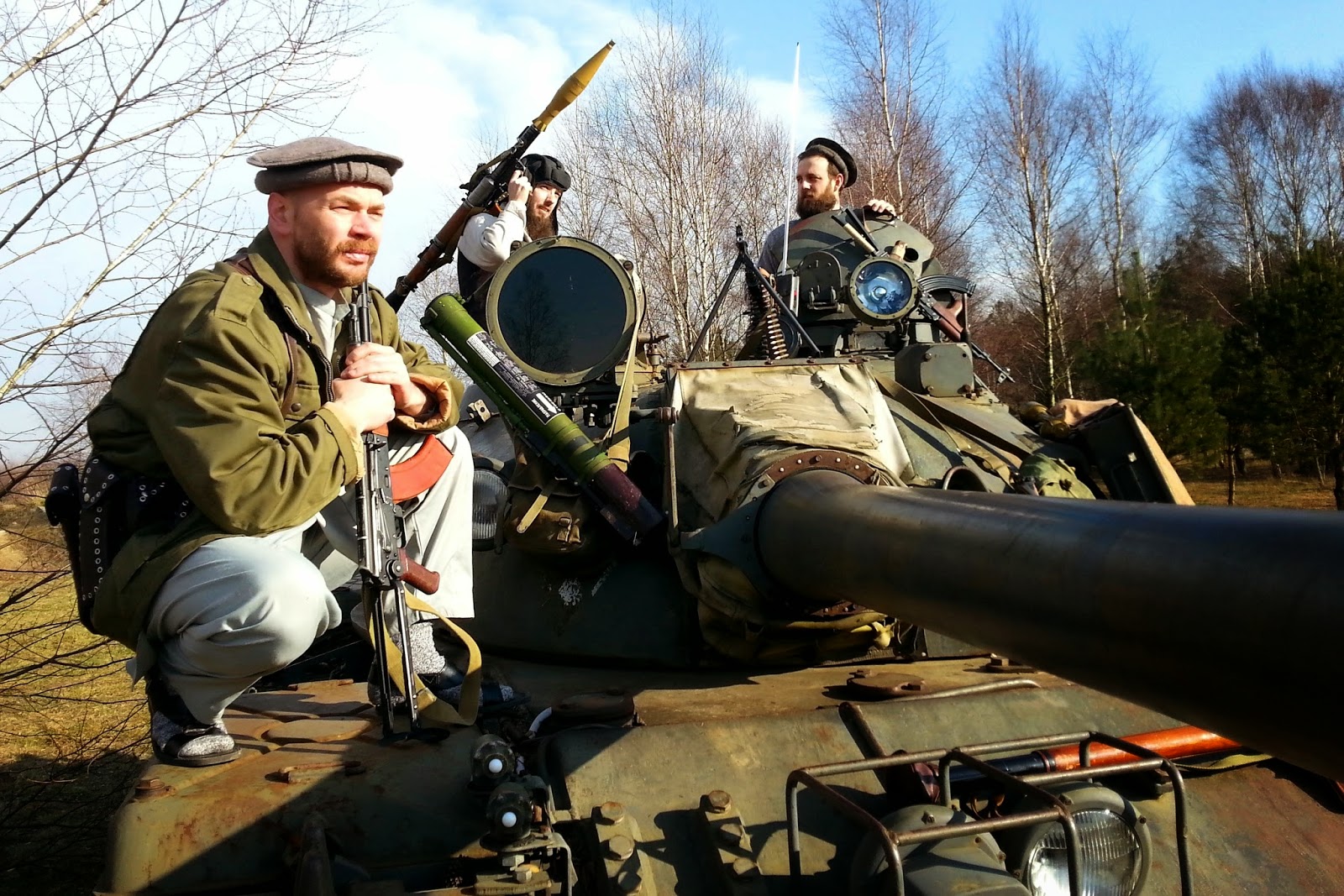
Docieramy na miejsce po około godzinie. Czołg stoi samotnie w polu otoczonym z kilku stron rzadkim drzewami. Ma ślady polskich oznaczeń – typowych szachownic. Nieruchoma bestia z armatą 100mm, zimną od lat, wycelowaną w nieistniejący cel. Chłopaki przebierają się, szykują broń i sprzęt, ja obchodzę maszynę i uwieczniam jej pancerny majestat aparatem. Po chwili podziwiamy go wspólnie. Rekonstruktorzy przeglądają wydrukowane zdjęcia z okresu wojny i okupacji ze Związkiem Radzieckim, by część z nich zaprezentować w nowej wersji – z czołgiem w tle. 

We reach the destination point after an hour or so. The tank stands alone in the field surrounded by single trees. It has Polish markings, typical chess-signs. An immobilized beast with a 100mm gun, cold for years, aimed at a non-existing target. The guys dress up, prepare weapons and equipment, and I go around the machine and I take photos of it to capture its armored majesty. In a second we admire it together. The re-enactors take a look at the photos from the era of war with the Soviet Union and occupation, to present some of them in the new version – with the tank as a background. 


Właściciel czołgu pokazuje jak otworzyć „bestię” - zaglądamy do wnętrza, w którym unosi się zapach wilgoci, rdzy, stali i historii. Obracamy wieże, ustawiamy armatę pod różnym kątem. Pogoda jest idealna, bardziej wiosenne niż zimowe słońce daje piękne światło. Ruszamy z sesją. Atak na czołg, zdjęcia na pancerzu, w wieżyczce, wewnątrz, pozowanie z bronią, kombinowanie, jak by tu jeszcze wykorzystać tego potwora. Ogromne przeżycie!

The owner shows us how to open “the Beast”-  we look inside the tank, filled with the smell of humidity, rust, steel and history. We move the tower, aim the gun at different angles. The weather is perfect, and the sun – more spring- than winter-like, gives us perfect light. We move on with the session. Attack on the tanks, pictures on the armor, in the turret, inside, posing with guns, wondering how the hell we can use this monster. Incredible experience!


Czołg, stroje, wyposażenie, broń, detale tworzą niepowtarzalny klimat. Obok wspomnianego aparatu, są i krótkofalówki. Są też gogle czy czołgowe hełmofony. Panowie zadbali o drobną pirotechnikę, by zasymulować dym z rur wydechowych czy smugi po wystrzałach z granatnika, o dymie armaty nie wspominając. Czołg jest zdobyczny, zwędzony od afgańskiej armii.

The tank, clothes, equipment, weapons, details create an extraordinary atmosphere. Apart from the mentioned camera, they’ve got walkie-talkies. There are goggles and tankmen's headphones. They guys took care of pyrotechnic to simulate smoke from the tank’s exhaust pipes or RPG trails or the smoke from the gun. The tank plays a captured one, grabbed from the Afghan army.


W przypadku tej grupy nie możemy mówić o regulaminowym umundurowaniu, lecz tradycyjnych strojach. I tak „pakol” to wełniany beret o charakterystycznym kształcie. Dwuczęściowy strój – koszula i szarawary (spodnie) to „salwar kamiz” – ogólnie używany w regionie od Afganistanu przez Pakistan po Indie. Koce, którymi na niektórych zdjęcia owinięci są rekonstruktorzy, to „patu”, miejscowy wyrób z wełny. Ładownice na magazynki do AK to z jednej strony lokalnej produkcji wyrób, z drugiej – przerobiony na miejscu chiński chicom.

In case of this group, we are not dealing with regular uniforms, but with traditional clothes. And so “pakol” is a woolen beret of a characteristic shape. Two-part clothing – a shirt and “sharawas” (trousers), is called “salwar kamiz” – it is in wide use in Afghanistan, Pakistan and India. Blankets, that the re-enactors are wrapped around with, are “patu” – woolen, of local production. AK ammo pouches are on one hand locally-made, on the other – adapted Chinese chicom. 


Uzbrojenie: wyrzutnie rakiet – RPG2, RPG7 i RPG18, ręczny karabin maszynowy RPD, karabinek AKMS, ale i ciekawostka – kopia AKM wykonana przez rusznikarzy z Przełęczy Chajberskiej, gdzie łączono np. ramową kolbę od AK74 i – jak w tym przypadku, przednie łoże z chwytem od rumuńskiego AIMS z podstawą AKM. Ot, taki "Frankenstein", który naprawdę dawał niezłego stracha ruskim. 

Firearms include grenade launchers: RPG2, RPG7 and RPG18, a light machine gun – RPD, an assault rifle – AKMS, but also a copy of an AKM assault rifle modernized by gunsmiths from the Khyber Pass, where an AK74 frame-stock was combined, as in this case, with vertical foregrip integrated into the handguard from a Romanian AIMS with an AKM base. A "Frankenstein" that really scared the shit out of the Rusky. 


Jak to wszystko się zaczęło? GRH Hindukush powstała w lutym 2013. Wtedy odbyła się pierwsza sesja, powstało też logo i fanpage. W marcu 2013 chłopaki spotkali się z Jego Ekscelencją Sayedem Ghazanfarem Hussainy'm, ówczesnym charge d'affaires Ambasady Islamskiej Republiki Afganistanu w Warszawie, podczas którego grupa zaprezentowała swoją pasję.

And how did it all begin? GRH Hindukush was founded in February 2013. That’s when the first session took place, logo and fanpage was created. In march 2013, the guys met His Excellency Sayed Ghazanfar Hussainy, at that time a charge d’affaires in the Embassy of the Islamic Republic of Afghanistan in Warsaw, when the group had an opportunity to present their passion.


O tym, że rekonstrukcje historyczne to nie tylko indywidualna pasja świadczą liczne projekty realizowane przez GRH Hindukush. Marcin Ogdowski, autor rewelacyjnego bloga zAfganistanu.pl i książki „zAfganistanu.pl: Alfabet Polskiej Misji” zaprosił ich do udziału w tworzeniu karcianej gry wydawnictwa WarBook, której akcja rozgrywa się w Afganistanie. Panowie pozowali do zdjęć, które zdobiły talię z Talibami.

The fact that re-enactment is not an individual passion is confirmed by numerous projects realized by GRH Hindukush. Marcin Ogdowski, an author of a prime blog zAfganistanu.pl and a book “zAfganistanu.pl: Alphabet of the Polish Mission”, invited them to participate in the creation of a card game of WarBook Publishing House, where action takes place in Afghanistan. The guys posed to pictures for the decks with the Taliban.


Inny przykład to zadania szkoleniowe. Grupa nawiązała kontakt z pionem szkoleniowym JWK w Lublińcu, proponując udział przy szkoleniu żołnierzy przed wyjazdem do Afganistanu. Dowództwo przyjęło propozycję, czego efektem był wypad z komandosami na poligon w Wędrzynie na przełomie czerwca i lipca 2013. Nie był to koniec. Na zaproszenie dowództwa JWK, GRH Hindukush wzięła udział w święcie jednostki, gdzie zaprezentowała kulturę Afganistanu, bez akcentów militarnych. Udział grupy w wydarzeniu został objęty patronatem Ambasada Islamskiej Republiki Afganistanu. Pani konsul Zohra Naiwa wypożyczyła nawet kobiece stroje na potrzeby wydarzenia. Panowie mieli też okazję spotkać się w Warszawie z Panią Marią Amiri, szefową Stowarzyszenia Współpracy Polsko-Afgańskiej „Hamkari”.

Another example is the training. The group got in touch with the training department of JWK in Lubliniec and offered participation in the training of soldiers before their missions in Afghanistan. Having received the command’s approval, GRH Hindukush – together with the operators, organized a training at the range in Węgrzyn at the turn of June and Jully 2013. That was not the end. Invited by the command of JWK to the unit’s official holiday, the group presented the culture of Afghanistan, without any military accents. Their participation in the event was patroned by the Embassy of the Islamic Republic of Afghanistan. Consul Hohra Naiwa even borrowed pieces of women clothing for the purpose of the even. The guys also had an opportunity to meet Maria Amiri, Chief ot the Polish-Afghan Cooperation Association “Hamkari”.


Sesje podobne do tej z Zelowa, GRH Hindukush zorganizowała m.in. na terenie Jury Krakowsko-Częstochowskiej. Kiedy indziej do rekonstrukcji wykorzystano samochód GAZ-69, pożyczony od znajomego. Pierwszym zlotem był zaś zlot grup rekonstrukcyjnych - Odyseja Historyczna w Leszczynku koło Kutna (lipiec 2013), gdzie grupa zdobyła wyróżnienie. Kolejnym wypadem o tym charaktrze był m.in. MWB 2014, kiedy to miałem przyjemność spotkać chłopaków. Wiosną tego samego roku grupa rozpoczęła pracę nad przygotowaniami do kolejnej edycji Odysei Historycznej, czego efektem było pierwsze miejsce, ale zaowocowało również następnym projektem z Marcinem Ogdowskim.

Sessions like the one from Zelow, GRH Hindukush organized e.g. in the region of the Cracow-Czestochowa Upland. In one of them, they used a GAZ-69 four wheel drive light truck, borrowed from a friend. The first rally was the one of re-enactors – Historical Odyssey in Leszczynek, near Kutno (July 2013), where the group got distinctive recognition. Another one was e.g. MWB 2014, where I had the pleasure of meeting the guys. In spring the same year, the group began preparations for the next edition of the Historical Odyssey which resulted in the first prize and another project with Marcin Ogdowski.


We wrześniu ubiegłego roku autor „zAfganistanu.pl” (obecnie zaś bezkamuflazu.pl) zaprosił GRH Hindukush do udziału w wernisażu zdjęć jego i Marcina Wójcika, wykonanych podczas wyjazdów do polskich żołnierzy służących w Afganistanie, połączonym z premierą albumu fotograficznego „Polski Afganistan”. Grupa została partnerem wydarzenia, które odbyło się w listopadzie 2014 w Krakowie. Chłopaki poznali wówczas m.in. Generała Broni Waldemara Skrzypczaka i Pana Podpułkownika Leszka Stępnia, szefa warszawskiego Ośrodka Weterana.

In September last year, the author of „zAfganistanu.pl” (presently running a blog bezkamuflazu.pl - "NoCamo.pl") invited GRH Hindukush to participate in an exhibition of photos taken by him and Marcin Wójcik during the missions of Polish soldiers in Afghanistan, combined with a premiere of aphoto album „Polish Afghanistan”. The group became a partner of the event that took place in November 2014 in Cracow. The guys had an opportunity to get to know General Waldemar Skrzypczak and Lieutenant Colonel Leszek Stępień, Chief of Warsaw Veteran’s Center.


Działalność grupy GRH Hindukush czy podobnych im stowarzyszeń to przykład kreatywnego podejścia do przeszłości, ofiarowania czegoś więcej niż suche fakty i liczby. To podróż w czasie i przestrzeni, emocje i masa informacji, ciekawostek, anegdot, możliwość dotknięcia żywej historii. Bo tak jak w przypadku chłopaków, którym serdecznie dziękuję za zaproszenie i możliwość uczestniczenia w sesji, pasja łączy się tu z pokładami wiedzy. A sesja niosła dla mnie dodatkową wartość dzięki silnemu akcentowi filmowemu. Bo pamiętajmy, że to właśnie grupy rekonstrukcyjne są przyszłością kina wojennego.

Acitvity of GRH Hindukush or similar associatios is an exmple of a creative approach towards the past and offering something more than just facts and figures. It's a travel in time and space, emotions and incredible amount of information, tidbits and anegdote, a chance to touch a living history. Just as in case of the guys whom I thank very much for invitation and  and opportunity to participate in the session, passion is combined with impressive knowledge. And the session had an added value for me thanks to a strong cinematic accent. And one needs to remember that these are the re-enactment groups are the future of the war movies.