czwartek, 24 września 2015

Panorama karbalska żołnierza polskiego / The Karbala panorama of the modern Polish soldier


Od 3 września 2004 do 11 września 2015 roku, czyli od rozpoczęcia bitwy o City Hall do premiery filmu „Karbala” minęło równo 11 lat i 8 dni. Warto było poczekać. Tak, jak polscy żołnierze w Iraku odnieśli zwycięstwo w pierwszej bitwie jaką stoczyli od 1945 roku, tak polscy filmowcy z Krzysztofem Łukaszewiczem udowodnili, że potrafimy kręcić porządne kino wojenne, a obrazy z tego gatunku nie muszą dotyczyć tylko II wojny światowej.

11 years and 8 days passed from 3rd September 2004 till 11th September 2015, that is from the beginning of the battle of City Hall till the premiere of the movie “Karbala”. It was worth waiting for. Just like the Polish troops in Iraq were victorious in the first battle they fought in since 1945, the Polish film-makers with director Krzysztof Lukaszewicz proved that we can make good war dramas and films of the genre do not have to focus only on the Second World War.


Rozczarują się ci, którzy wybiorą się do kina, by obejrzeć „Karbalę” jako wierną relację z obrony City Hall. Nie jest to film dokumentalny, a filmowa adaptacja, fabularyzowana wersja. Jako główną oś i motyw przewodni wykorzystuje historię bitwy o ratusz w irackim mieście podczas rebelii Muktady as-Sadra, ale nie zabraknie tu też fikcji czy odniesień do wydarzeń zarówno poprzedzających karbalskie starcia, jak i następujących jakiś czas po nich. Najlepszym przykładem jest historia sanitariusza Kamila Grada (Antoni Królikowski), oskarżonego o nieudzielenie pomocy rannemu i niewykonanie rozkazu (co w rzeczywistości miało miejsce już po zakończeniu bitwy o City Hall). 

Disappointed will be those going to the cinema to see „Karbala” as a faithful report from the battle of City Hall. It is not a documentary, but an adaptation, a fictionalized version. It uses as the main axis and the leading motif the history of the battle of City Hall in the Iraqi city during a rebellion of Muktada as-Sadr, but one will find here also fictitious elements as well as references to the events preceding and following the fights in Karbala. The best example here is the history of a medic, Kamil Grad, (Antoni Krolikowski), charged for not having administered aid to the wounded and disobeying an order (what actually happened when the battle of City Hall was already over).


To właśnie on oraz kapitan Kalicki (którego pierwowzorem jest ppłk Grzegorz Kaliciak, dowódca obrony ratusza, pracujący przy filmie jako konsultant), grany przez Bartłomieja Topę,  są głównymi postaciami. To im reżyser, scenariusz i kamera poświęcają najwięcej uwagi. Pozostali są na dalszym planie, na tyle dalekim, że trudno nawiązać z nimi więź widz-postać - tracą przez to na indywidualnej wyrazistości, a szkoda, bo aktorzy weszli doskonale w "mundurową skórę". Jednak, moim zdaniem, bohater „Karbali” jest tak naprawdę zbiorowy, bo film Krzysztofa Łukaszewicza przedstawia uniwersalny obraz polskiego żołnierza-misjonarza. Znajdziemy tu różne postawy – od tchórzostwa, przez panikę po akty bohaterstwa, rozmaite przykłady podejścia do służby, misji i armii. Obrazuje je także kontrast między doświadczonym Kalickim a Gradem-żołtodziobem. Ta dwa bieguny panoramicznego obrazu polskich wojaków. Prawdopodobnie prawdziwi misjonarze, weterani odnajdą we wszystkich postaciach cząstki siebie. Być może właśnie dlatego, że film skupia się na naszych rodakach, stosunkowo mało miejsca poświęcono niestety bułgarskim specjalsom kapitana (a w rzeczywistości w 2004 roku - podpułkownika) Getowa, którzy mieli spory wkład w obronę ratusza. Z drugiej strony, pamiętajmy, że „Karbala” nie jest dokumentem.

It is him and Capt. Kalicki (whose prototype is Lt. Col. Grzegorz Kaliciak, the commander in the battle of City Hall, supporting the production as an advisor), played by Bartlomiej Topa, who are the main characters. They are the two that the director, script and camera devotes most of the time. The others are in the background – far enough to make it quite difficult to establish the viewer-character relationship - they lack the individual distinctness - sadly, since the actors wore their "uniform skin" perfectly. However, in my opinion, the protagonist of “Karbala” is a collective one, because Krzysztof Lukaszewicz’s film depicts an universal image of a Polish missionary-soldier. We will find here different attitudes – cowardice, panic, acts of courage, various opinions about the service, mission and army. These are also portrayed by means of the contrast between experienced Kalicki and Grad the rookie. They are the two poles of the panoramic view of the Polish troops. Probably, the real-life missionaries, the veterans will find here pieces of themselves. Maybe that is why the movie focuses on our soldiers, with unfortunately relatively little attention paid to the Bulgarian special ops forces of Capt. (and in fact, in 2004 – Lt. Col.) Getow, who surely contributed in the battle of City Hall. On the other hand, keep in mind the fact that “Karbala” is not a documentary.


Irytować może momentami szarpane tempo – dłużyzny między scenami wymiany ognia a tymi spokojniejszymi, na siłę wydłużanymi. Natkniemy się też na typowe dla kina wojennego klisze. Kto obejrzał w życiu kilka filmów z tego gatunku, zorientuje się szybko, znając pewne mechanizmy, m.in. który z żołnierzy polegnie w jednej z pierwszy scen (jest to nawiązanie do pierwszej śmiertelnej ofiary wśród misjonarzy PKW Irak). 

What might irritate at times is an uneven tempo – pretty longish moments between the shootouts and more quiet scenes, extended too much. We will also find here clichés - typical for war dramas. Who have seen a couple of representatives of the genre will quickly guess – knowing certain mechanisms, e.g. which of the soldiers will get killed in one of the opening scenes (it is a reference to the first KIA among the Polish missionaries in Iraq).


Z drugiej strony, w filmie nie brakuje elementów kluczowych dla kina wojennego, czyli porządnie zrealizowanych sekwencji bitewnych (choć jestem świadomy, iż bywają też dramaty wojenne, w których nie pada jeden strzał), gdzie umiejętnie wykorzystano zarówno dynamiczne ujęcia, jak i te w zwolnionym tempie (co szczególnie warto obejrzeć na dużym kinowym ekranie). Obraz walk dopełniają smaczki, jak umieszczone na hełmach markerem informacje o grupie krwi, motyw reprymendy za nieregulaminowy strój, "dopancerzanie" samochodów, relacje z miejscową ludnością, które dodatkowo tworzą atmosferę przebywania z kamerą "wśród" żołnierzy na misji. 

On the other hand, the movie is strong in presence of elements key for the war cinema, that is: profesionally realized battle sequences (although I am aware that there are war dramas with no single shot fired), where dynamic shots are mixed skillfully with slow-motion ones (which should be definitely seen on the big screen in the cinema). The image of the battle is complemented with details such as the blood types written with a pen on helmets or the motif of the reprimand for clothing violating the regulations, "armoring up" of the cars, relations with the locals that additionally build the atmosphere of being with the camera "among" the missionary-soldiers.


Wracając do scen bitewnych, pierwszy zwiastun przywoływał porównania do „Helikoptera w ogniu”. I nic dziwnego. Bo choć sam reżyser nie lubi ponoć, gdy porównuje się „Karbalę” do filmu poświęconego bitwie o Mogadiszu, to moim zdaniem, mniej lub bardziej świadomie inspirował się on amerykańskim obrazem Ridleya Scotta. Najlepszym przykładem na to jest jedna z ostatnich scen, kiedy Kamil Grad biegnie tuż obok Honkera z dzieckiem na rękach - sekwencja przypominająca „Mogadiszu mile” w „Helikopterze…”. Z drugiej strony, pokusiłbym się nawet o stwierdzenie, że w „Karbali” znalazło się nawiązanie do „Demonów wojny wg Goi” Władysława Pasikowskiego. W obrazie Krzysztofa Łukaszewicza końcową sceną jest ujęcie Kamila Grada i „Młodego” Waszczuka (Piotr Żurawski) bez nóg w ciemnym wnętrzu śmigłowca. Podobną – z majorem Edwardem Kellerem (Bogusław Linda) siedzącym samolocie w otoczeniu trumien, znajdziemy w filmie reżysera „Psów”. Nie uważam jednak, by należało porównywać "Karbalę" do "Helikoptera" w kontekście muzyki - ostatecznie, ze względu na miejsce akcji, dominujące bliskowschodnie brzmienia są naturalnym wyborem.

Coming back to the battle scenes, the first trailer brought to mind comparisons to „Black Hawn Down”. Nothing strange about it. Although, from what I heard, the director himself doesn’t like it when “Karbala” is compared to the movie devoted to the battle of Mogadishu, I think that he became inspired by Ridley Scott’s film – more or less consciously. The best example here would be one of the final scenes where Kamil Grad is running next to a Honker car with a kid in his hands – a scene recalling “the Mogadishu mile” from “Black Hawk Down”. On the other hand, I would say that „Karbala” has a moment of reference to Wladyslaw Pasikowki’s “Demons of War by Goya”. In the movie by Krzysztof Lukaszewicz the final scene presents Kamil Grad and the “Young” Waszczuk (Piotr Zuraski) without his legs in the dark inside of the chopper – a similar one, with Major Edward Keller (Boguslaw Linda) surrounded with coffins in a plane, we will find in the film made by the director of “Pigs”. However, I think that "Karbala" should be compared to "Black Hawk Down" in terms of the soundtrack - considering the place of the action, dominating Middle East sounds are a natural choice.


Czy zatem „Karbala” to polski „Black Hawk Down”? Złośliwi powiedzieliby, że jaki kraj, taki „Helikopter w ogniu”.  Moim zdaniem, jest to spory pierwszy krok w kierunku świadomego, rzetelnego (po nieudanym serialu „Misja Afganistan”) polskiego kina wojennego, które wreszcie (choć nie chcę, by zabrzmiało to jak zarzut) dostrzega tematy i bohaterów spoza kręgu II wojny światowej, walki z hitlerowskim i sowieckim okupantem. „Karbala” to kino z ambicjami, z misją ukazania realiów współczesnego pola walki z perspektywy polskiego żołnierza. Być może kolejna produkcja zostanie poświęcona Nangar Khel. Być można znajdą się większe środki, a sponsorzy prócz tytułów i logotypów w większym stopniu udostępnią fundusze na rozmach. Tymczasem twórców „Karbali” ja cenię za kreatywność i zaradność – umiejętność wykorzystania dostępnych, zdecydowanie za małych środków. To dzięki tym cechom, w myśl hasła „Polak potrafi”, warszawska fabryka FSO na Żeraniu zamieniła się w City Hall. Nie jest sztuką nakręcić film za duże pieniądze. Sztuką jest zrobić go pomimo finansowych przeciwności. Analogicznie, polscy żołnierze musieli „opancerzać” Honkery kamizelkami kuloodpornymi, by pierwsza lepsza seria z „pekaśki” nie zrobiła z samochodu sita. I dali radę – o czym warto mówić także w filmach.


So is „Karbala” a Polish version of „Black Hawk Down”? Haters would probably say that we’ve got “Black Hawk Down” we deserve. In my opinion, this is the first step towards the fully aware and honest (after a failed TV series “Mission Afghanistan”) Polish war cinema that finally (and I don’t want it to sound as an objection) begins to see issues and heroes from outside of the Second World War circle and the fight against the Nazi and Communist occupier. “Karbala” is a movie with ambitions and a mission to depict the reality of modern warfare from the perspective of a Polish soldier. Perhaps, the next production will be devoted to Nangar Khel. Perhaps, there will be more funds or the sponsors will grant more than just the titles, but also the money for the grand scale. Meanwhile, I truly appreciate the creators of “Karbala” for their creativity and resourcefulness – the ability to use the available sources, surely too small. Thanks to these features, according to the slogan “Poland – we can do it!”, the FSO car factory in Zeran district of Warsaw became the City Hall. There’s nothing special about making a movie with a lot of money. It is special when the movie is made despite financial difficulties. Analogically, Polish soldiers had to armor up their Honker vehicles with bulletproof vests to make sure a burst from a PK machine gun would not turn the car into a Swiss cheese. And they made it – and this is something worth talking about – also in the movies.


Rok temu na ekrany polskich kin weszło „Miasto 44” Jana Komasy – kontrowersyjny pod względem formy i treści film o Powstaniu Warszawskim, miszmasz stylistyczny, pełen odniesień do popkultury XXI wieku, z ujęciami z teledysków i gier komputerowych. Obraz mówiący językiem współczesnych młodych ludzi, do nich mający dotrzeć i zachęcić do odkrywania wiedzy o Powstaniu - obraz będący zaledwie fragmentem większej całości, ale fragmentem inicjującym zainteresowanie. Nie inaczej jest z Karbalą. To film o szerszym kontekście i jednocześnie stanowiący element szerszego spojrzenia. Tak, jak obchody Aszury były iskrą dla rozpoczęcia szturmu na City Hall, tak „Karbala” jest zapalnikiem dla zainteresowania tematem bitwy, inicjującym sięgnięcie po książkę samego ppłk Kaliciaka „Karbala. Raport z obrony City Hall” czy noszącą identyczny tytuł, jak film, pozycji autorstwa Marcina Górki i Piotra Głuchowskiego. Dlatego obraz Krzysztofa Łukaszewicza polecam tym, którzy po prostu chcą wiedzieć więcej o służbie polskich żółnierzy i są ponad spłycającymi porównaniami do „Helikoptera w ogniu” oraz tym, którzy mają ochotę na porządną dawkę kina wojennego z biało-czerwoną flagą na współczesnych mundurach.

A year ago, a movie about the Warsaw Uprising - Jan Komasa’s „City 44” had its premiere – a movie controversial in terms of the form and content, a stylistic mixture, full of references to the 21st century pop-culture, with shots taken from video clips and computer games. It was a motion picture speaking the language of the modern times’ young people that was supposed to encourage them to gain knowledge about the Uprising, that was just a small element of the bigger issue, but the element initiating the interest. “Karbala” is no different. It’s a movie with a broad context that – at the same time, constitutes an element of the bigger view. Just like the celebration of Ashura was a spark that launched the attack on City Hall, “Karbala” triggers the interest in the battle, initiates the reading of the book by Lt. Col. Kaliciak “Karbala. A report from the battle of City Hall” or the one with the same title as the movie, written by Marcin Gorka and Piotr Gluchowski. Thus, I recommend Krzysztof Lukaszewicz’s movie to those who would like to know more about the service of the Polish soldiers and those who are above trivializing comparisons to “Black Hawk Down” as well as to those who would like to get a solid piece of the war cinema with a Polish flag on the modern uniforms.


[Wszystkie zdjęcia pochodzą z oficjalnego profilu filmu w serwisie Facebook: / All pictures were downloaded from the official Facebook profile of the movie: www.facebook.com/KarbalaFilm].
 

wtorek, 14 kwietnia 2015

Minigun - największa filmowa "kosiarka" / The Minigun - the movie top "lawn-mower"

Film tworzy wiele elementów. Gra aktorów, muzyka, scenariusz, dialogi, zapadające w pamięć ujęcia, sceny, które przechodzą do historii. Nawet jeśli trwają kilkanaście lub kilkadziesiąt sekund. Jak długa seria, piekielny ogień ciągły z karabinu maszynowego, który niszczy wszystko na drodze kul. Np. dżunglę. Tak, zgadliście, to scena z „Predatora” (1987, reż. John McTiernan) - moment, w którym narodziła się kariera karabinu M134 Minigun - największej i najbardziej filmowej "kosiarki".

A movie is created my multiple elements. Acting, music, screenplay, dialogues, memorable shots and scenes that become historical, even if they last for a couple or dozens of seconds. Like a long burst, a hellfire from a machine gun that cuts like grass everything on its way. A jungle, for instance. Yes, you got that right, it’s a scene from „Predator” (1987, directed by John McTiernan) – the moment the career of the M134 Minigun - the biggest and the most cinematic "lawn-mower" - was born.


Karabin oczywiście pojawił się w filmie chwilę wcześniej, jako broń „seksualnego tyranozaura” Blaina (Jessie Ventura), ale była to zaledwie uwertura do tego, co miał zaprezentować Mac (Bill Duke), karczując dżunglę po śmierci swojego towarzysza.

Of course, the machine gun appeared earlier in the movie, presented as the weapon of choice of „Sexual Tyrannosaurus” Blain (Jessie Ventura), but that was just a foreplay to what Mac (Bill Duke) was about to present while spraying the jungle with lead in a revenge-frenzy after his pal was killed.


Wprowadzony w czasie wojny w Wietnamie, 6-lufowy karabin kalibru 7.62x51mm oparty na systemie Gatlinga, rzecz jasna pojawiał się i wcześniej w filmach, ale jako karabin montowany na pokładzie śmigłowców typu UH-1 Huey, jak np. w „Czasie Apokalipsy” (1979, reż. Francis Ford Coppola) albo „Rambo 2” (1986, reż. John Pan Cosmatos). Skąd nazwa "Minigun"? Karabin stworzono jako mniejszą wersję działka M61 Vulcan. I faktycznie trzeba przyznać, że kaliber 7.62x51mm w porównaniu z 20mm pociskami to naprawdę rozmiar "mini". Termin jest obecnie często wykorzystywany w odniesieniu do innych podobnych karabinów. "Ojca" Miniguna, czyli karabin, Gatlinga można zobaczyć m.in. w "Księdze ocalenia" (2010, reż. Allen i Albert Hughes) oraz "Ostatnim samuraju" (2003, reż. Edward Zwick).

Introduced during the Vietnam War, a six-barreled machine gun, 7.62x51mm caliber, based on the Gatling system, appeared of course earlier in the cinema, but as a machine gun mounted on helicopters such as the UH-1 Huey, as in “Apocalypse Now” (1979, directed by Francis Ford Coppola) or “Rambo: First Blood Part II” (1986, directed by John Pan Cosmatos). Where does the name "Minigun" come from? The machine gun was created as a smaller version of a M61 Vulcan cannon. And surely you gotta admit that 7.61x51mm, when compared to 20mm rounds, sounds like a "mini" size. Nowadays, the term is used in reference to other similiar weapons. And the "father" of Minigun, that is the Gatling gun, you could see in "Book of Eli" (2010, directed by Allen & Albert Hughes) as well as in "The Last Samurai" (2003, directed by Edward Zwick).


Wracając do naszego "bohatera", cały filmowy urok strzelania z Miniguna polega na pruciu z niego trzymając oburącz, wciskając do oporu przycisk joysticka jako spust. Nic dziwnego, że Arnold pozazdrościł Billowi Duke’owi ekranowej rozwałki, bo cztery lata później mogliśmy go zobaczyć z Minigunem w „Terminatorze 2” (1991, reż. James Cameron), gdzie jako cyborg niszczył precyzyjnym ogniem policyjne radiowozy. Jest to de facto ten sam egzemplarz wykorzystany w "Predatorze", zmodyfikowany na potrzeby nowego filmu, choć wstępnie Arnie miał pruć z pistoletu maszynowego  MAC-10. Dzięki Bogu twórcy filmu zmienili zdanie.

Coming back to our "main hero", the whole movie magic of the Minigun-shooting is the handheld use, when you press the button of the joystick like a trigger. There’s nothing strange about the fact that Arnold got jealous about Bill Duke’s demolition in the screen and four years later we could see him with the Minigun in “Terminator 2: Judgment Day” (1991, directed by James Cameron), where as a cyborg he destroys police cruisers with an accurate fire. It is in fact the gun used in "Predator", modified for the new movie, although first Arnie was supposed to spread lead from a MAC-10 submachine gun. Thank God they changed their mind.


Zresztą, wystarczy spojrzeć na ten uśmiech.

Besides, just like at this smile and it’s all clear.


Oczywiście, nie mogło zabraknąć tej broni w kolejnych częściach Terminatora. W zdecydowanie najsłabszym „Buncie maszyn” (2003, reż. Jonathan Mostow), w dwa Miniguno-pochodne karabiny uzbrojone są roboty T-1, zaś w „czwórce” (2009, reż. Joseph McGinty Nichol) – jeden z potężnych, mocno przypalonych T-600 wędruje przez zgliszcza Los Angeles niczym mroczny żniwiarz z na stałe zamontowanym na ramieniu M134.

Of course, the weapon is obviously present in following parts of the Terminator series. In definitely the weakest “Rise of the Machines” (2003, directed by Jonathan Mostow), T-1 robots are armed with two Minigun-based machine guns, and in the fourth part (2009, reż. Joseph McGinty Nichol), an enormous heavily-burnt T-600 cyborg marches through the ashes of Los Angeles like a grim reaper with the M134 mounted one of his arms.


A wracając do „Terminatora 2”, z całym szacunkiem dla Billa czy Jessy’ego, do którego oryginalnie należał karabin w „Predatorze”, Arnoldowi zdecydowanie bardziej on pasuje. Oczywiście, Miniguna nie mogło zabraknąć w remake’u „Preatora”, czyli w „Predators” (2010, reż. Nimród Antal), gdzie M134 trafił do rąk wielkiego specnazowca, Nikolaja (Oleg Takarov). Jeden z łowców niszczy go strzałem z działka plazmowego, tak jak w pierwszej części zniszczeniu podobnym strzałem uległ karabin M16 Dutch’a (Arnold Schwarzenegger).

Coming back to “Terminator 2”, with all the respect for Bill or Jessy who the machine gun originally belonged to in the movie, but it suited Arnold helluva better. Of course, it had to appear in the remake of “Predator” – “Predators” (2010, directed by NimródAntal), where the M134 is seen in hands of a huge Spetsnaz soldier, Nikolaj (Oleg Takarov). Just like in the original version, Nikolaj sprays the jungle with lead as Mac did. One of the Predators destroys the Minigun with a plasma blaster shot, similarly to the method of destruction of the M16 assault rifle used by Dutch (Arnold Schwarzenegger) in the first part.


Rok przez Terminatorem, inny elektroniczno-mechaniczny twór starł się z policją przy użyciu Miniguna. W sequelu „Robocopa” z 1990 r. (reż. Ivan Kershner), znajdujący się na głodzie narkotykowym i w szale zabijania RoboCain kosi policjantów z zamontowanego na jednym z ramion M134 (rzecz jasna, zmodyfikowanym na potrzeby jego konstrukcji). Oczywiście nie ma co porównywać tych dwóch scen – precyzyjny stoicki ogień Terminatora bije na głowę furiackie serie narko-cyborga.

A year before the Terminator, another electronic-mechanical creation faced the police with the Minigun. In the 1990 sequel of “RoboCop” (directed by Irvin Kershner), a drug-hungry RoboCain, in its kill-frenzy wastes police officers with the M134 (obviously modified for its individual construction) mounted on one of its arms. Of course, it’s pointless to compare the two scenes – an accurate fire of Terminator is far more better than furious bursts of the narco-cyborg.


Podobnie uzbrojony został Nemesis w „Resident Evil 2: Apocalypse” (2004, reż. Alexander Witt) – z zapasem 5000 sztuk amunicji ze skrzyni umieszczonej na plecach, wybija członków oddziału S.T.A.R.S. ogniem tak precyzyjnym, że znajdujący się w tym samym pomieszczeniu cywil nie zostaje nawet draśnięty. Broń otrzymał także Don Cheadle w drugiej części “Iron Mana” (2010, reż. Jon Fevreau), można więc uznać, że Minigun cieszy się szczególną popularnością jako naramienny lub ręczny miotacz ołowiu wśród bohaterów filmów science-fiction.

Similarly, the character of Nemesis in „Resident Evil 2: Apocalypse” (2004, directed by Alexander Witt) carries the weapon with 5000 rounds in an ammo box packed on his back and kills all S.T.A.R.S. members with accurate fire, without even scratching a civilian present in the same room with the soldiers. Filmmakers also equipped Don Cheadle with the weapon in the sequel of “Iron Man” (2010, directed by Jon Fevreau), so you might say that the Minigun is especially popular as a shoulder-mounted and handheld lead-thrower among science-fiction characters.


Wróćmy jednak do historii… Samemu McTiernanowi po „Predatorze”, Minigun chyba na tyle się spodobał, że wykorzystał go niestety w nie do końca udanym pastiszu Schwarzeneggerowskich filmów, czyli „Bohaterze ostatniej akcji” (1993), gdzie możemy zobaczyć stacjonarną, zamontowaną w furgonetce wersję M134 z krótkimi lufami. Broń pokazuje się tylko na chwilę i nie odnosi wielkiego skutku.

However, let us get back to history… Having a good experience with the machine gun in „Predator”, McTiernan used the firearm in an unfortunately failed pastiche of Schwarzenegger’s movies – „Last Action Hero” (1993), where we can see a short-barreled version of the M134, mounted in a van. However, the gun appears for a while in the hands of a criminal and the shots fired has no effect.


Zamontowany podobnie jak w „Bohaterze ostatniej akcji”, Minigun pojawił się w drugiej części filmu „Red” (2013, reż. Dean Parisot), gdzie czarny charakter (Lee Byung-hun) dokonuje totalnej rozwałki próbując trafić Bruce’a Willisa i Johna Malkovicha – oczywiście, podobnie jak w nieudanej komedii McTiernana, czyni to bez skutku.

Mounted similarly as in “Last Action Hero”, the Minigun appeared in the sequel of “Red” (2013, directed by Dean Parisot), where the black character (Lee Byung-hun) demolishes everything in his line of fire, trying to hit Bruce Willis and John Malkovich – of course, as in the failed McTiernan’s comedy, without any results.


Grzechem byłoby nie wspomnieć o kultowym Dannym Trejo jako tytułowym bohaterze filmu „Maczeta” (2010, reż. Ethan Maniquis & Robert Rodriguez) i karabinie zainstalowanym na motocyklu. Jako że Maczeta nie SMSuje, lecz zabija, możecie sobie wyobrazić, co wyczynia z tym "narzędziem".

It would be a sin not to mention the cult figure of Danny Trejo as the title character of “Machete” (2010, directed by Ethan Maniquis& Robert Rodriguez) and the machine gun mounted on his motorcycle. As Machete doesn’t text, but kills, you know what to expect with this “tool”. 


Natomiast jeden z ciekawszych „występów” Minigun zaliczył w obrazie Braci Wachowskich – „Matrixie” (1999). Używając karabinu zainstalowanego na pokładzie śmigłowca Bell-212, Neo (Keanu Reeves) buduje istną ścianę ognia, ale na tyle precyzyjną, by skosić agentów, nie raniąc przy tym Morfeusza (Lawrence Fishbourne) – jednym z najbardziej pamiętnych ujęć jest ukazanie deszczu łusek z karabinu.

Still however, the Minigun got one the most interesting roles in the Wachowski Brothers’ movie – „Matrix” (1999). Neo (Keanu Reeves) uses the machine gun mounted in the Bell-212 helicopter to create a volley of fire – accurate enough to hit the agents, without injuring Morpheus (Lawrence Fishbourne) – here, one of the most memorable shots is the one presenting the rain of brass from the machine gun.


Karabin jako bohater dający ogromną przewagę, siejący strach i śmierć, ale i wprawiający w zdumienie, pojawił się w obrazie ilustrującym pierwszą bitwę Amerykanów w czasie wojny w Wietnamie, czyli „Byliśmy żołnierzami” (2002, reż. Randall Wallace), gdzie jest częścią systemu M21, współtworzonego razem z wyrzutniami rakiet niekierowanych.

The weapon as giving a superior firepower, spreading fear and destruction, but also leaving everyone speechless, appeared in a movie that depicted the first battle of the American military in the Vietnam War, that is: “We Were Soldiers” (2002, directed by Randall Wallace), where it was part of the M21 system, co-created with unguided-missile launchers.


W “Helikopterze w ogniu” (2001, reż. Ridley Scott), GAU-17/A, czyli wersja M134 dla marynarki i lotnictwa, znalazł się na pokładzie MH-60L Black Hawk i AH-6 Little Bird. I tutaj, podobnie jak w „Matrixie”, znalazło się piękne ujęcie deszczu gorących łusek.

In „Black Hawk Down” (2001, directed by Ridley Scott), where the GAU-17/A, that is the M134 version for the USAF and US Navy, it is mounted on the MH-60L Black Hawk and AH-6 Little Bird. Here also, just like in “Matrix”, we can see a beautiful rain of hot brass.


Karabin w tej wersji zobaczymy także na wyposażeniu łodzi operatorów SEALs w „Akcie Odwagi” (2012, reż. Scott Waugh & Mike McCoy). Nauka z tego jedna. Gdy dobrzy goście mają tę giwerę, złym kolesiom pozostaje tylko brać nogi za pas!

We will see this particular version of the gun also as the weapon of SEALs operators in their boats in “Act of Valor” (2012, directed by Scott Waugh & Mike McCoy). The conclusion here is simple. When the good guys have this gun, all the bad guys can do is run!


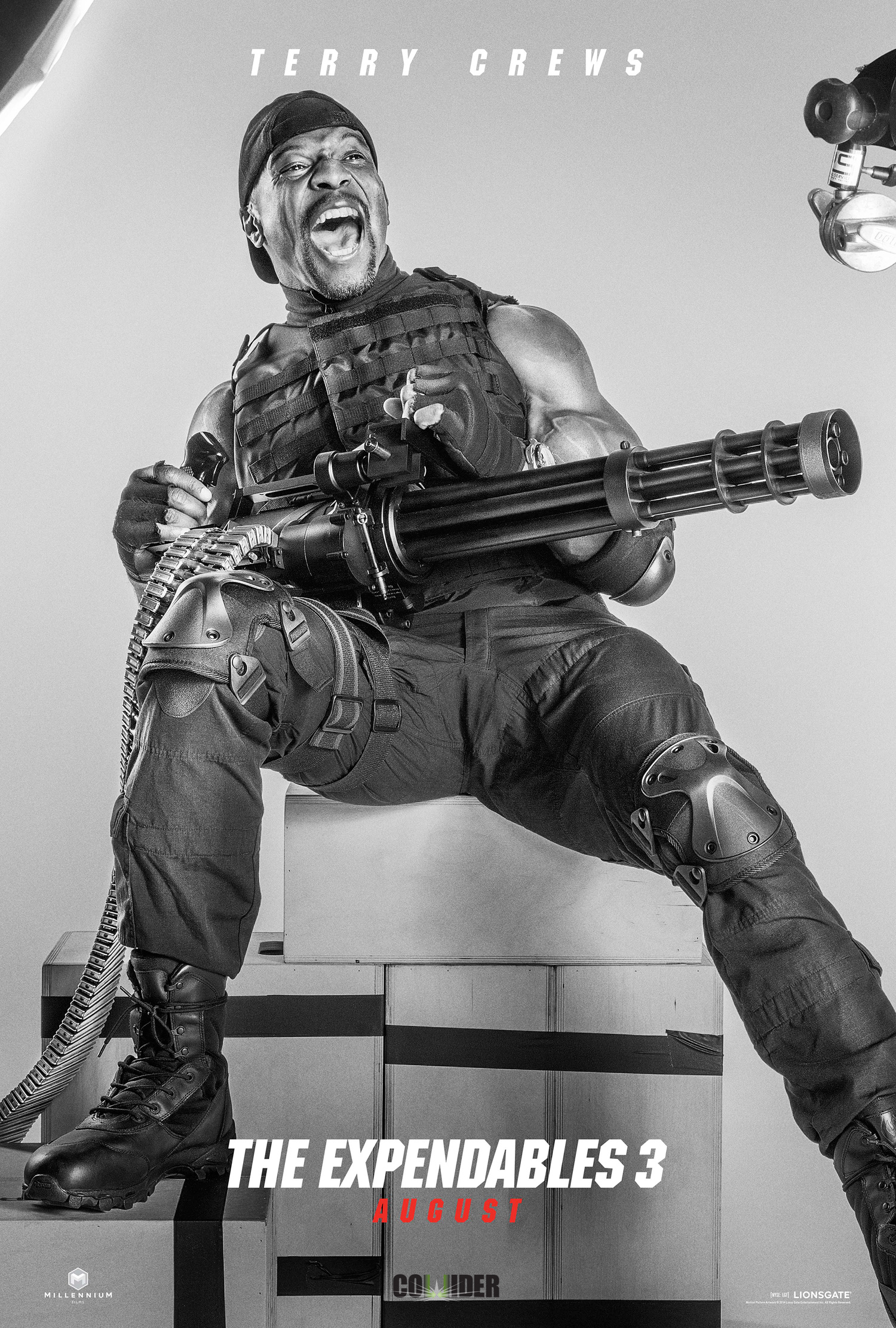
Minigun to oczywiście broń cholernie żarłoczna, co przy szybkostrzelności maksymalnej bagatela 6000 strzałów na minutę, oznacza błyskawiczne wyczerpanie amunicji. Niejako odniesiono się do tego w „Niezniszczalnych 3” (2014, reż. Patrick Hughes) – filmie, który jako jeden z ostatnich możemy posądzać o realizm. Zgodnie z ostrzeżeniem Gunnara (Dolph Ludgren) na chwilę przez strzelaniną w dokach, Cezarowi w ciągu kilku sekund kończą się naboje.

The Minigun is of course very ammo-consuming which – with the rate of fire 6000 shots per minute, equals an extremely fast depletion of ammo. You can find a reference of a kind to this fact in “The Expendables 3” (2014, directed by Patrick Hughes) – a movie that is certainly the last one to be perceived as realistic. Just like Gunnar (Dolph Lundgren) said a few minutes before the firefight in the docks, Caesar (Terry Crews) runs out of ammo in a few seconds.


Poza tym, niezależnie od tego, jak wielka i silna jest postać (nie licząc mutantów czy cyborgów), stabilne trzymanie i precyzyjny ogień jest bardzo trudny, dlatego broń zwykle jest montowana na pojazdach czy śmigłowcach jak widzieliście już w kilku scenach. Plus, w przeciwieństwie do zdecydowanej większości broni, potrzebuje też zewnętrznego, elektrycznego zasilania. Dlatego z wielką skrzynią amunicji należy zadbać o coś, co będzie w ogóle obracało sześć luf i dostarczało pociski.

Besides, no matter how strong the character is (apart from mutants or cyborgs), it is very difficult to hold the weapon steady and provide an accurate fire, and that is why the weapon in mounted on vehicles or helicopters as you could see in several scenes. Plus, contrary to most of the firearms, it also needs an external power supply. So apart from the ammo box you need to make sure you’ve got something (that is: the energy) that would keep turning the six barrels and feed the gun with rounds.


I tutaj oddaję głos Panu Christopherowi Myersowi, Dyrektorowi Marketingu z firmy Profense, która specjalizuje się w dostarczaniu systemów na bazie M134 dla wojska i innych służb mundurowych. Miałem przyjemność spotkać Pana Myersa na zeszłorocznych targach MSPO (na Międzynardowym Salonie Przemysłu Obronnego) w Kielcach i zamienić kilka słów na temat znajdującego się na stoisku Miniguna.

And now is the time for the expert’s opinion – let me introduce to you Mr. Christopher Myers, Chief Marketing Officer from Profense, a company that specializes in production of the M134 weapon systems for the military and other uniformed services such as law enforcement. I had the pleasure of meeting Mr. Myers at the last year’s International Defense Industry Exhibition in Kielce and the pleasure of talking for a while about the Minigun displayed at the stand.


Admin z M134 Minigun na targach MSPO 2014.
/ Admin with the M134 Minigun at the MSPO 2014.
Na co dzień pracuje Pan z bronią, więc oglądając filmy z pewnością widzi Pan masę nieścisłości. Czy zapomina Pan o nich, traktując film jako fikcję i świat rządzący się swoimi prawami czy irytuje się i wyłącza film?

You work with weapons on daily basis so surely while watching movies you see a lot of mistakes. What is your attitude: do you skip them because you treat it all as fiction and you accept the fact that the movie world is governed by its rules or do you get irritated and turn the movie off?

Tak naprawdę to lubię oglądać filmy, w których jest ukazany Minigun. Ludzie zawsze fajnie komentują systemy uzbrojenia tego typu, na co ja oczywiście reaguje uśmiechem, bo jest to, coś co moja firma produkuje i rozwija na całym świecie.

Actually, I enjoy watching the movies where a Minigun is shown. People always gawk and make cool remarks about the weapon system, which of course makes me smile because it’s a weapon system I manufacture and support globally. 

Christopher Myers, Profense, LLC
A gdzie zaczyna się fikcja? Jakie są najczęściej popełniane błędy w przedstawieniu tej broni? Czy są jakieś uzasadnione uproszczenia?

Where do the ficticious elements begin? What are the most common mistakes in the gun’s depiction? Are there any justifiable simplifications? What are the stereotypes or myths supported by the cinema?

Fikcja dotyczy zawsze faktu, że system uzbrojenia może być przenoszony ręcznie. Choć jest to TECHNICZNIE możliwe, to jednak w rzeczywistości mało prawdopodobne, to znaczy – standardowo cała metalowa konstrukcja broni to około 28kg. A jest to waga bez zasilania (24VDC) i amunicji (100 sztuk waży około 1,3kg), a system umożliwia wystrzeliwanie 3000 sztuk amunicji na minutę. Czyli 39 kg amunicji + 28 kg samej broni + zasilanie około 8 kg wraz z zamontowaną taśmą doprowadzającą pociski. To oznacza taszczenie co najmniej 90kg dla „wystrzałowej” zabawy przez minutę. Wszystko, tylko nie to, jest możliwe (śmieje się).

The ficticious elements always begin with the fact that the weapon system can be hand carried. While it is TECHNICALLY feasible the reality is not likely, meaning – the average gun weight in a steel configuration is approximately 62 lbs. This is without a battery pack (24VDC) and ammunition (each 100 rounds weighs 3.5 lbs) and the weapon system fires 3,000 rounds p/minute. Thus – 100 lbs in ammo + 62 lbs in gun + battery pack approximately 17.5 lbs and feed belt plus harness. You would be lugging at least 200 lbs for a 60 second joy ride. Other than that anything is possible (laughs).


Ma Pan swój ulubiony film z Minigunem w jednej z głównych ról?

Do you have your favourite movie with the Minigun in one of the main firearm roles?

“Helikopter w ogniu” to póki co najlepsza produkcja z M134 z uwagi na ukazanie oddziału ratunkowego i moje doświadczenia jako pilota służącego w Siłach Lotniczych USA. Miałem okazję przekonać się na własne oczy o przeważającej sile ognia, jaką niesie ze sobą system. To najbardziej realistyczny filmowy portret tejże broni. Co więcej – z punktu widzenia psychologii, nie ma NIC co dałoby się porównać do dźwięku strzelającego M134.

"Black Hawk Down" is by far the best action series with the M134 because of its combat rescue and a profile I flew my entire career for the U.S. Air Force. You get to witness the true impact and superior firepower this weapon system brings. It is the most realistic portrayal of the firearm in the movies. Also – from a psychological perspective there is NOTHING like to sound of a M134 in action. 


Czy widzi Pan jakieś trendy pod kątem prezentacji broni w filmach, nie tylko jeśli chodzi o Miniguna? Czy Profense współpracowało z twórcami filmów? Czy wasze produkty można zobaczyć na ekranie?

Do you see any specific trends concerning the presentation of firearms in the movies, not only about the Minigun? Have Profense co-operated with filmmakers? Can we see your products in the silver screen?

Przykre jest to, że ludziom się wydaje, iż bycie “bad-assem hardkorowcem” jest fajne. Że zabijanie jest fajne. A jest zupełnie na odwrót. Profesjonalista (czy to żołnierz sił specjalnych czy regularnych oddziałów) nie chce nikogo zabijać. Zabijanie wynika z potrzeba ocalenia życia członków oddziałów lub swojego. Systemy uzbrojenia są produkowane, by chronić… tak, słowo klucz to CHRONIĆ życie żołnierza czy oddziału. To, co obecnie obserwuję, to że wszyscy chcą sobie  „zapolować”. Choć ŚWIETNIE to wygląda w filmach, trzeba zrozumieć, że to tylko rozrywka. Nawet nie próbujcie tego robić na serio. 

Zaś jeśli chodzi o filmową współrpacę, Profense angażuje się w różne produkcje. Ale ze względu na podpisane przez nas umowy o zachowaniu poufności nie mogę zdradzić, o jakie działania konkretnie chodzi.

The unfortunate reality is people tend to think being a “Johnnie Bad Ass” is cool. That killing people is cool. It’s the absolute opposite. A true professional soldier (whether Special Forces or Conventional Forces) doesn’t want to kill anyone. It is a necessity of a requirement to save a team member or personal life. Weapon systems are designed to protect… the key word here is PROTECT one’s life, one’s team. What I continue to see now is everyone wants to “hunt”. While it makes for GREAT movies people must remember these are movies for entertainment. Please don’t ever try to replicate.

As for movie co-operation, Profense, LLC supports a varietyof media formats. Because of our non-disclosure agreements I can not discuss who or what we’ve supported.


W trakcie naszej rozmowy na targach opowiadał Pan o udoskonaleniach ułatwiających użytkowanie karabinu, m.in. w zakresie chłodzenia. Co zmieniło się w obrębie systemu w ciągu 50 lat odkąd karabin pojawił się w uzbrojeniu?

During our conversation at the MSPO, you mentioned several improvements that make the use of the machine gun easier, e.g. in terms of cooling system. What have changed during the 50 years since the M134 appeared among the weapons used by the US military? What would be its future, in your opinion?

Główne założenia systemu broni pozostaną niezmienione (np. wysoka i stabilna szybkostrzelność). Jeśli chodzi o udoskonalenia (lub trendy), to są alternatywne materiały (np. kompozyty, włókna węglowe, stopy, powłoki), zasilanie (alternatywne źródła energii) i wszystko, co pozwoli w jakikolwiek sposób zmniejszyć wagę. Inny kluczowy trend to cyfrowe analizy oferujące na bieżąco aktualne dane w celu prowadzenia zapobiegawczej konserwacji.

The weapon system’s basic principals will always remain the same (i.e., high rates of sustained fire). Where there are improvements (or trends), can speak of of alternative materials (i.e., composites, carbon fibers, alloys, coatings), power supplies (i.e., alternative energy consumptions) and any weight-savings possible. Another key trend is digital analytics to provide real-time data trends for preventative maintenance. 


Jak produkty i rozwiązania oferowane przez Pana zmieniają rzeczywistość konfliktów? Co dają użytkownikom, poza siłą ognia? Czy istnieje coś, czego kamera filmowa nie uchwyci?

The products and solutions you’re offering, how they change the reality of military conflicts? What do they give to the users, apart from the firepower? Is there anything that the movie camera cannot capture?

Możemy pochwalić się tym, że oferuje siłom zbrojnym najbardziej zaawansowaną wersję M134. Profense nieustannie prowadzi kompleksowe prace nad M134: od cyfrowego sterowania bronią po udoskonalenia w mechanicznym zasilaniu, by wyeliminować zacięcia.

We take great pride in providing the military with the most advanced M134 available. From digital Gun Control Units to mechanical-feed improvements to eliminate hand-over failures, Profense continues to build the M134 from the ground up. 


Czy kino odzwierciedla technologie dostępne dla żołnierzy XXI wieku? A może jest kilka kroków do tyłu?

Does the cinema reflect the technology available for soldiers of the 21st century? Or is it a few steps behind?

Nie, kino jest na bieżąco z bronią przyszłości. Można spokojnie założyć się, że to co widzi się w filmach, za parę lat będzie standardowym wyposażeniem żołnierzy. Chyba, że jest TAJNE (śmiech).

No – cinema captures current and future weapons pretty well. You can bet what you see in the movies will be a soldiers real weapon in a few short years. If they are not CLASSIFIED (laughs).


Czy istnieją jakieś anegdoty o M134, którymi chciałby się Pan z nami podzielić?

Are there any anecdotes concerning the M134 you would like to share with us?

M134 to najbardziej skuteczny system uzbrojenia w swojej klasie (broni małokalibrowej). Nie ma drugiego takiego systemu jak ten Gatlinga, który w tak ogromnym stopniu dominowałby na polu bitwy. Nie mogę się doczekać rozwoju trendów w siłach naziemnych, dotyczących wykorzystania M134 jako broni zwiększającej siłę ognia jednostki, gdyż poziom skuteczności siły ognia jednego M134 to mniej więcej sześć karabinów typu M240, M60 czy FN MAG-58.

The M134 is the most combat effective weapon system in its class (small arms). There is no other weapon that dominates the battle-space like a Gatling system. Look to see trends in conventional ground forces utilizing weapons like the M134 as force multipliers because the fire effectiveness of a single M134 equals upto six M240, M60 or FN MAG-58’s. 

Dzięki za rozmowę i do zobaczenia na MSPO 2015!

Thanks for the interview and see you at the MSPO 2015!